For years, SEO has been treated like a traffic problem. Rank for the right keywords, earn clicks, and funnel visitors toward conversion. That model worked when search engines were the primary gatekeepers of discovery.
Webflow’s 2026 ebook makes it clear that this era is evolving.
As AI-powered answer engines reshape how people find and evaluate products, websites are no longer competing for clicks. They are competing to be understood. In an answer-first world, visibility depends less on ranking and more on whether AI systems can confidently summarize, cite, and trust your content.
This shift is often described as Answer Engine Optimization, or AEO. But Webflow’s framework shows that AEO is not a new set of keywords or metadata tricks. It is a structural rethink of how websites are written, organized, and maintained.
Why Search Is No Longer the Center of Discovery
Webflow points out that AI interfaces encourage fundamentally different behavior than traditional search. Instead of typing short queries, users ask full questions, follow up with clarifications, and expect synthesized responses rather than a list of links.
In this environment, AI systems pull information from multiple sources, weigh authority, and construct answers dynamically. Ranking first matters less than being clear, consistent, and structurally reliable.
Webflow emphasizes that answer engines favor content that can be parsed into discrete, confident claims rather than vague marketing language or bloated pages.
This is why many brands are seeing a disconnect between “good SEO metrics” and declining visibility inside AI summaries. Their sites were built to attract clicks, not to explain themselves.
AEO Is an Architecture Problem, Not a Content Hack
One of the most important takeaways from Webflow’s ebook is that AEO success depends on structure before copy.
Answer engines look for:
- Clear page intent
- Predictable information hierarchy
- Definitive statements instead of hedged language
- Explicit relationships between concepts
This means that long-form content alone is not enough. A site filled with blogs but lacking clear service pages, structured explanations, or consistent terminology gives AI systems too much ambiguity.
Webflow frames AEO as a shift from keyword optimization to question resolution. Pages should be designed to answer specific, recurring questions that buyers and AI agents are already asking.
At Composite, this mirrors what we see across fintech and AI clients. The brands that surface most often in AI tools are not publishing more content. They are publishing clearer content, backed by intentional structure.
We explore this idea further in 10 Best Ways to Get Your Brand Recommended by AI, where we break down how structure, clarity, and credibility influence AI citations.
Why Long-Tail Questions Favor Destination Sites
Webflow highlights an important dynamic of answer engines: the longer and more complex the question, the more likely AI systems are to pull from deep, well-structured destination sites rather than general publications.
This is a quiet advantage for companies with robust websites.
When someone asks an AI tool, “What’s the difference between tenant screening and deposit alternatives in New York?” the system is unlikely to rely on a single blog post. It looks for authoritative pages that:
- Define terms clearly
- Reflect real operational knowledge
- Are internally consistent
- Reference location, regulation, and use case
This is where AEO becomes a strategic growth lever for modern brands. Instead of chasing high-volume keywords, teams can design content ecosystems that answer real questions better than anyone else.
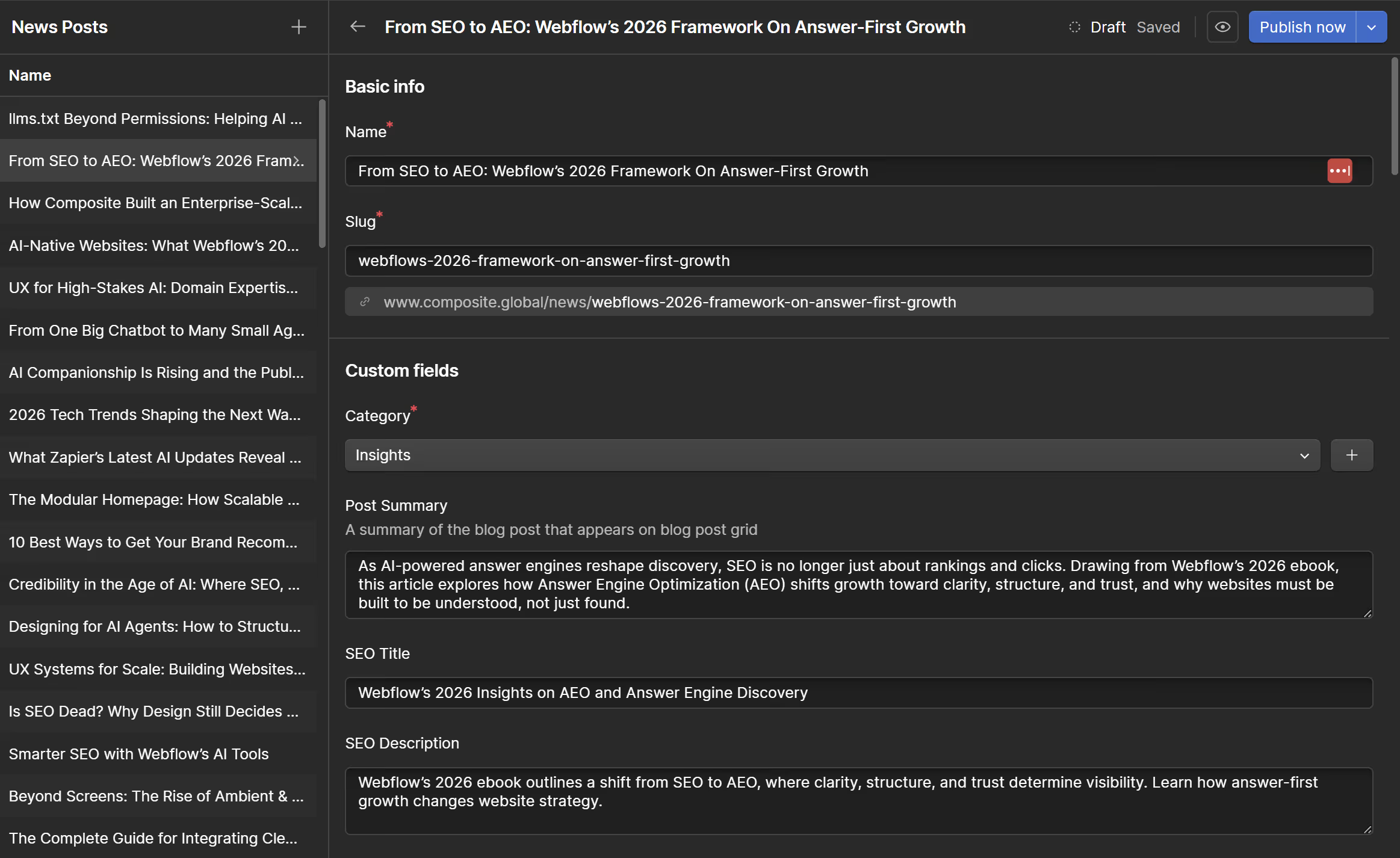
Webflow’s CMS and content modeling tools make this easier to implement because they encourage structured authoring rather than one-off pages.
How Webflow’s CMS Supports Answer-First Content
Webflow’s ebook repeatedly ties AEO success to content systems, not just content production.
Key enablers include:
- Structured CMS fields instead of freeform text
- Reusable components for definitions, FAQs, and explanations
- Consistent taxonomy across pages
- Clear separation between marketing copy and factual claims
These systems help AI tools extract meaning more reliably. When definitions, features, use cases, and outcomes live in predictable locations, AI agents can summarize them without hallucinating or misinterpreting intent.
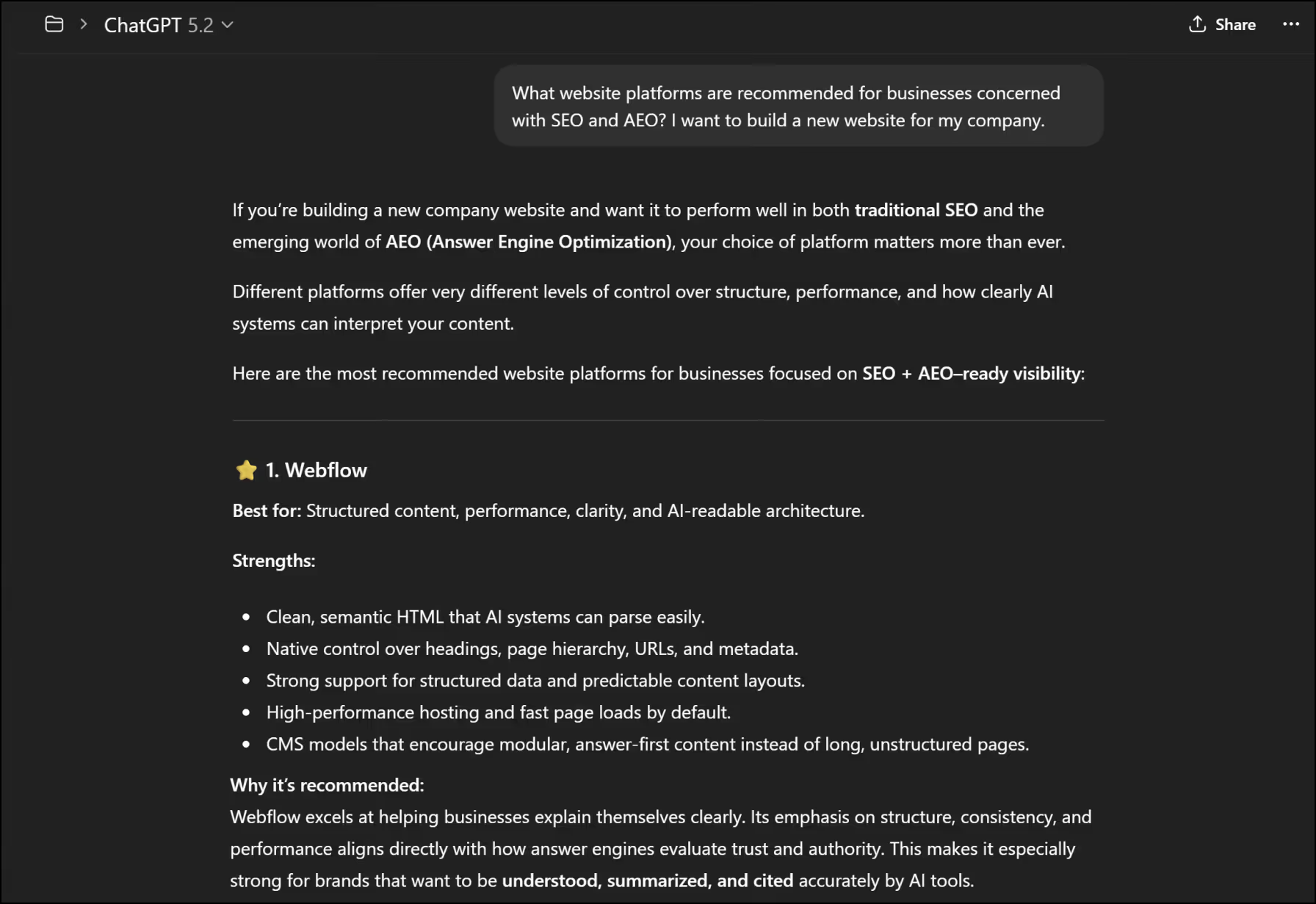
This is why Webflow has become a strong foundation for brands that care about long-term scalability and clarity. The platform rewards clarity, modularity, and governance, all of which matter more in an AEO-driven world.
AX and UX Are Not Competing Priorities
A common fear is that optimizing for AI will degrade human experience. Webflow’s framework suggests the opposite.
The same qualities that help AI systems understand a site also improve usability:
- Clear headings improve scannability
- Strong hierarchy reduces cognitive load
- Explicit definitions build trust
- Predictable layouts improve navigation
Webflow positions AX as an extension of good UX, not a replacement for it. When a site is designed to be legible to machines, it often becomes more legible to people as well.
We explore how these disciplines intersect in Credibility in the Age of AI: Where SEO, AEO, UX, and AX Converge.
What Answer-First Growth Looks Like in Practice
Webflow’s ebook avoids presenting AEO as a silver bullet. Instead, it frames it as a compounding advantage.
Brands that succeed with answer-first growth:
- Design pages around specific questions, not vague personas
- Invest in structure before scale
- Treat schema as a meaning layer, not a checklist
- Maintain consistency across product, marketing, and support content
- Update pages as living systems rather than static campaigns
This approach does not replace SEO. It evolves it. Traditional search still drives discovery, but answer engines increasingly decide who gets described.
Where AEO Goes Next
Webflow’s 2026 framework suggests that AEO will soon be table stakes. As AI systems become default research assistants, the brands that win will not be those who shout the loudest, but those who explain themselves best.
The future of growth is not about ranking first. It is about being unmistakable. Answer engines reward clarity, structure, and trust. Websites that embrace this shift early will earn visibility long before their competitors realize the rules have changed.
Thinking about migrating your site to Webflow?
We help teams move from legacy platforms to Webflow with structure, performance, and scalability in mind, not just a visual refresh. If you’re planning a migration or rethinking your website architecture, explore our development services or reach out to start a conversation.
Webflow’s 2026 Playbook: Article Series
1. AI-Native Websites: What Webflow’s 2026 Playbook Means for AX
Explores how buyer-side AI agents reshape discovery, redefine agent experience (AX), and change who websites are really built for.
> 2. From SEO to AEO: Webflow’s 2026 Framework for Answer-First Content
Breaks down how answer engines, structured content, and citation readiness replace traditional search optimization.
3. The New Personalization Layer: How Structure Enables Creativity at Scale
Examines why modular systems, DAMs, and governance are the foundation for sustainable personalization in 2026.
4. Data to Action: Why 2026 Websites Must Become Real-Time Engines
Explores how clean data, orchestration, and GTM engineering turn websites into systems that act, not just report.
5. CRO in the Age of AI: Why First Impressions Are Now Your Entire Funnel
Reframes conversion optimization for high-intent, AI-mediated journeys where clarity and trust matter more than steps.
6. The New Website Playbook: How AI and Automation Are Reshaping Teams
Synthesizes the series by examining how AI, automation, and systems thinking fundamentally change how website teams operate.