We have trained users to expect constant novelty. Short-form platforms deliver new content every few seconds—feeds refresh endlessly and stories move on before you’ve grasped the message. Attention is evaluated instantly and discarded just as quickly.
The modern web often responds by adding more sections, more animation, more density. The assumption is simple: if someone is interested, they will keep moving downward. That is where pacing breaks down.
The Age of Acceleration
Over the past decade, digital experiences have become denser and faster.
Homepages stack section after section. Landing pages compress strategy, product education, proof, and conversion into one continuous flow. Visual effects compete for attention within the same viewport. In the race to communicate everything, we have removed friction, but also removed rhythm.
Attention is not infinite, it is allocated. Cognitive load theory tells us that working memory is limited. When too much information is presented at once, the brain does not absorb more, it absorbs less.
A thoughtful UX agency understands this constraint. Design is not about adding more content. It is about sequencing it.
Density Is Not Depth
Long pages are not inherently flawed. Some of the strongest storytelling online unfolds through scroll. The issue emerges when density replaces pacing. When every section demands attention, uses bold headlines, introduces new visual language, and competes with animation, the result is not engagement, but fatigue.
Users begin to scroll mechanically. They scan for anchors, they jump to the end, and they leave with a vague impression rather than a clear understanding. Digital pacing is the difference between reading a novel and flipping through a crowded brochure.
White Space Is Not the Answer
Minimalism once positioned white space as the cure for clutter, but empty space alone does not create clarity. Pacing is not just visual breathing room. It is structure that builds on your narrative.
It is knowing when to:
- Introduce tension
- Provide explanation
- Offer proof
- And pause
Strong pacing considers hierarchy, contrast, and emotional cadence. It understands that attention needs space, not just reduction. The goal is not less content, it is controlled progression.
Digital Pacing is Cultural
It’s tempting to think more density equals more fatigue and more minimalism equals more clarity, but pacing is not a global constant.
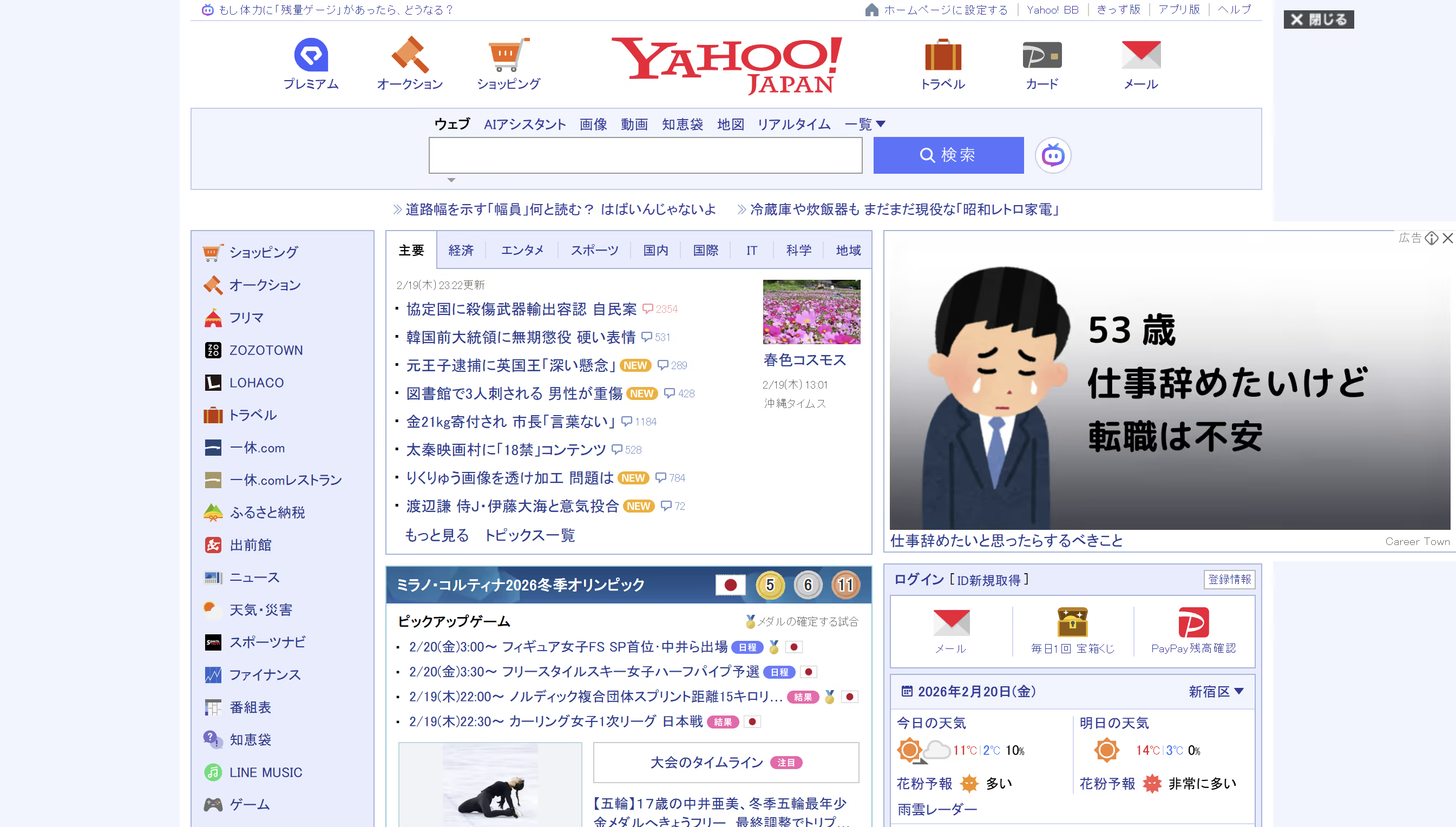
In some markets, sparse pages signal confidence and focus. In others, density signals thoroughness and trust. Japan is a useful example. Designers working across cultures have described how what looks like clutter to Western audiences can read as reassurance to Japanese users, and how minimal layouts can feel “too lonely.”
The takeaway is not “make everything busy.” It’s that digital pacing has to match what your audience needs in order to feel informed and safe.
If your users are making high-stakes decisions, they may want more visible detail up front. If they are browsing casually, they may want fewer choices and more guidance. The same interface can create either confidence or fatigue depending on who you built it for.
This is why the best UX work starts with audience context, not aesthetics. A strong pacing strategy is not minimal or maximal. It’s intentional, and it’s tested.
Designing for Memory, Not Just Movement
Most analytics measure scroll depth. Few measure retention, yet memory is what determines brand recall, trust, and conversion over time. When everything is emphasized, nothing is remembered.
When pacing is deliberate, users leave with clear mental anchors:
- A headline that reframed a problem
- A visual that simplified complexity
- A story that connected emotionally
A mature UX agency designs for these moments intentionally. It considers not only how users move through a page, but what stays with them after.
The Economics of Attention
Digital environments are competing with constant interruption. Notifications. Tabs. AI copilots. Background noise. In this landscape, clarity is currency and pacing becomes a strategic advantage. It slows the right moments down and accelerates others. It guides attention rather than overwhelming it.
The brands that stand out are not necessarily the ones with the longest pages or the boldest animations. They are the ones that respect cognitive bandwidth.
Toward a More Deliberate Web
Scroll is not the problem. Speed is not the problem. Unstructured density is.
As digital experiences become more complex, restraint becomes more valuable. Modularity, clear hierarchy, and narrative sequencing all help create space for the user to understand your content.
The web does not need less content. It needs better pacing. The next evolution of digital maturity may not be about adding more features or more motion, but about knowing when to pause.
More content does not guarantee more clarity.
If you are rethinking how users move through your site and what they actually remember, we are a dedicated Webflow agency designing experiences that prioritize pacing, hierarchy, and cognitive ease.