We don’t live in a reading-first world anymore, but a stimulation-first one.
Feeds refresh endlessly, notifications interrupt constantly, and content competes for attention in seconds, not minutes. People aren’t disengaged because they don’t care, they’re responding to an environment engineered for quick hits of dopamine.
That reality changes how websites should be written, structured, and experienced. In a dopamine-driven web, clarity is the difference between engagement and abandonment.
Attention Has Changed, Not Intelligence
Shorter attention spans are often framed as a failure of users. That’s the wrong diagnosis.
People are making decisions faster because they’re processing more inputs at once. They scan before they commit and look for signals of relevance before they invest effort.
Good UX doesn’t fight that behavior. It works with it.
For any design agency building modern digital experiences, the challenge isn’t getting users to slow down. It’s helping them understand quickly enough to stay.
Why More Copy Often Makes Things Worse
When attention is scarce, the instinct to explain more is understandable. Teams add paragraphs, qualifiers, and backup messaging “just in case.”
The result is usually the opposite of what they want. Too much copy increases cognitive load, obscures what actually matters, delays decision-making, and creates uncertainty instead of clarity.
In a high-stimulation environment, volume feels like friction. Concise copy doesn’t remove meaning, it surfaces it.
Concise Does Not Mean Minimal
There’s a difference between being brief and being thoughtful. Minimalism removes while concision prioritizes. Concise UX copy makes a clear promise early, commits to a point of view, avoids hedging and filler, and reduces choices instead of listing them.
This is not about saying less. It’s about saying the right thing first. For a website agency, this kind of editing is a UX skill, not a marketing trick.
Designing for the Scan, Not the Scroll
Most users decide whether to engage before they ever read fully. That decision is shaped by headlines that explain instead of tease, subheads that resolve uncertainty, visual hierarchy that signals importance, and spacing that lets ideas breathe.
People don’t need every detail immediately. They need confidence that the page is worth their attention. Strong UX gives them that confidence early.
Why This Matters More Now
Dopamine-driven environments reward immediacy. Trust-driven experiences reward clarity. When users can’t quickly understand what a page is offering, they don’t slow down to figure it out, they leave.
That’s why concise, intentional copy now carries more weight than clever phrasing or exhaustive explanation. It reduces hesitation and helps users move forward without doubt.
This is where experienced UX teams and web agencies differentiate themselves. Not by adding more content, but by making meaning legible faster.
Copy Is a Design Decision
Writing for attention doesn’t happen at the end of the process. It starts with judgment about what matters.
Every word on a page is the result of a choice. What leads, what follows, what’s emphasized, and what’s removed. Editing copy isn’t about shortening sentences for the sake of brevity, it’s about deciding what actually deserves space.
In a high-stimulation environment, excess language doesn’t feel thorough. It feels uncertain. When everything is explained, nothing stands out. When every idea is qualified, no idea feels intentional.
Good copy creates momentum. It helps users understand what matters without asking them to work for it. It reduces the mental effort required to orient, decide, and move forward.
This is why copywriting should be done in full collaboration with design, not just as a separate writing task. It shapes hierarchy, pacing, and confidence. It determines whether a page feels considered or cluttered.
In a dopamine-driven web, clarity doesn’t come from saying more, but from knowing what to leave out.
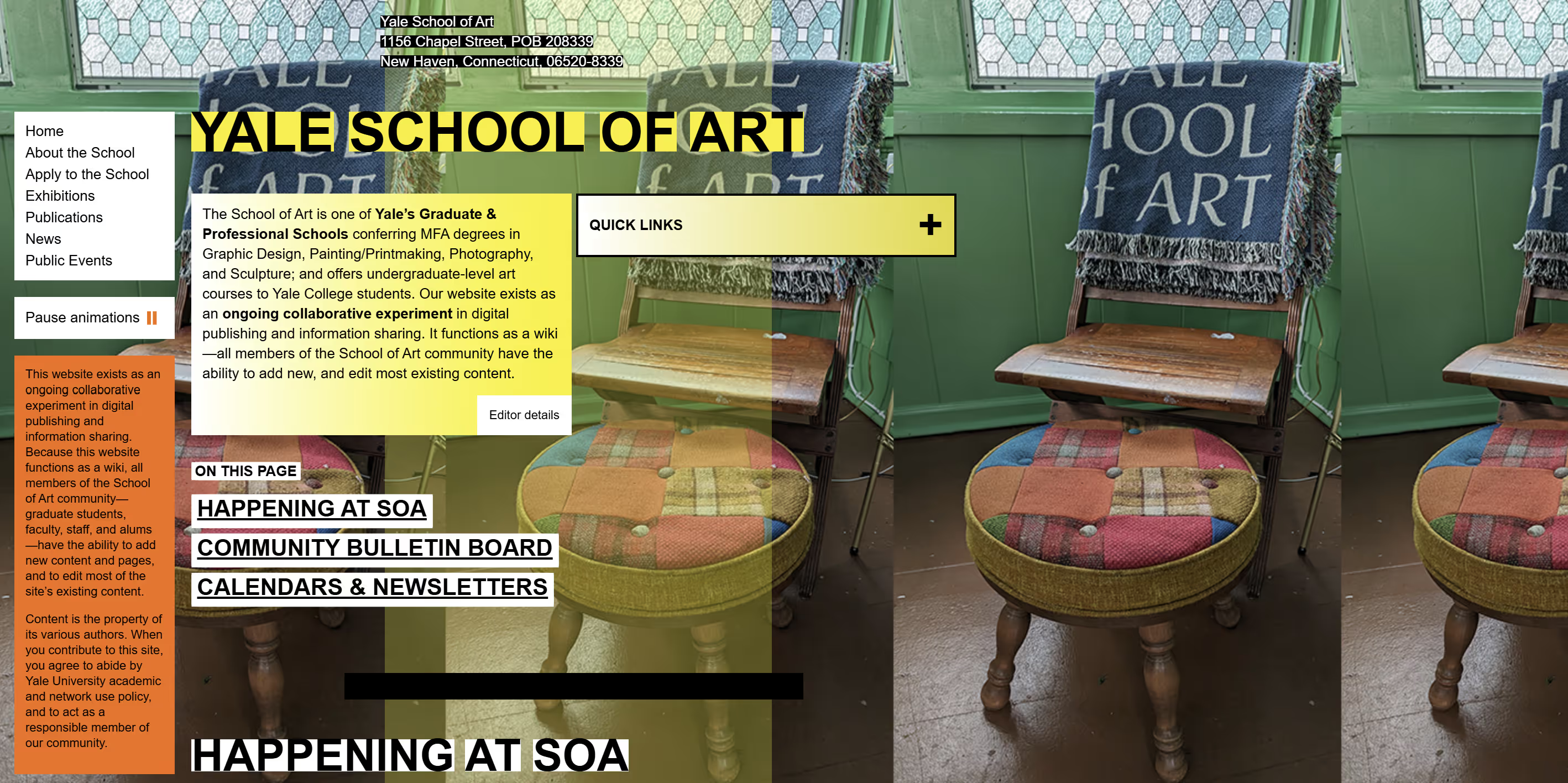
How to Write for a Dopamine-Driven Web
Designing for attention doesn’t require tricks or gimmicks. It requires discipline.
Start by deciding what the page must communicate before anything else. If a user reads only the headline and subhead, they should understand what the page is for and whether it’s relevant to them.
Next, remove anything that delays that understanding. Background context, secondary benefits, and supporting detail can come later. If they compete with the core message, they weaken it.
Write headlines that explain rather than tease. Use subheads to resolve uncertainty, not introduce it. Reduce the number of ideas competing for attention at once, and let hierarchy do the work instead of repetition.
Most importantly, edit with intent. Ask what each sentence earns by being on the page. If it doesn’t clarify, prioritize, or move the user forward, it doesn’t belong.
This is not about stripping pages bare. It’s about making decisions visible.
Designing for Attention Is Designing for People
People haven’t lost the ability to think deeply, they’ve lost the luxury of time. Websites that respect that reality don’t talk down to users or overload them. Instead, they communicate clearly, confidently, and with intention.
In an environment built to distract, the most humane thing a website can do is be clear quickly. It is not lowering the bar, but meeting people where they are in today’s fast-paced world.
Designing for a high-stimulation web takes judgment.
We share insights on UX, language, and structure, and help teams design websites that communicate clearly and confidently. Explore our services or reach out to start a conversation.