Some of our previous articles have focused on what was lost when websites were optimized primarily for AI readers: structure over story, clarity over character, efficiency over feeling.
This one answers the obvious next question: How do you get the human vibe back without breaking AI performance?
The good news is you don’t have to choose. Human UX and AI optimization aren’t opposites. They just require different priorities.
Start With Meaning, Not Structure
AI rewards clarity while humans respond to intention. Many teams reversed that order. They built pages to be parsed first and felt second. To restore humanity:
- Lead with what you want people to feel before what you want machines to extract
- Let structure support meaning, not replace it
- Treat headings as narrative cues, not just semantic labels
A well-structured page can still have a point of view. Most just don’t.
Write Like Someone Is Actually Reading
AI-friendly copy often becomes overly neutral, compressed, and emotionally flat. Human-focused copy uses contrast, allows emphasis, has rhythm, makes choices, and cultural references.
To rebalance, stop writing for “everyone.” Write for someone specific—imagine a caricature of your audience. Let sentences breathe and put your own emotions in the text. Allow opinions to exist, and describe with intent.
Clarity doesn’t require blandness. Your personal flair is what makes users relate and connect to your material.
Use Visuals to Express, Not Just Explain
In the race for performance, visuals became utilitarian. Diagrams were used instead of moments in time. Stock illustrations instead of tasteful visuals. Safe layouts designed instead of memorable ones.
Human UX uses visuals to reinforce tone, create emotional anchors, and signal personality instantly.
You don’t need more images. You need images that mean something—to you and your viewers.
Our Treatment for GoodWork
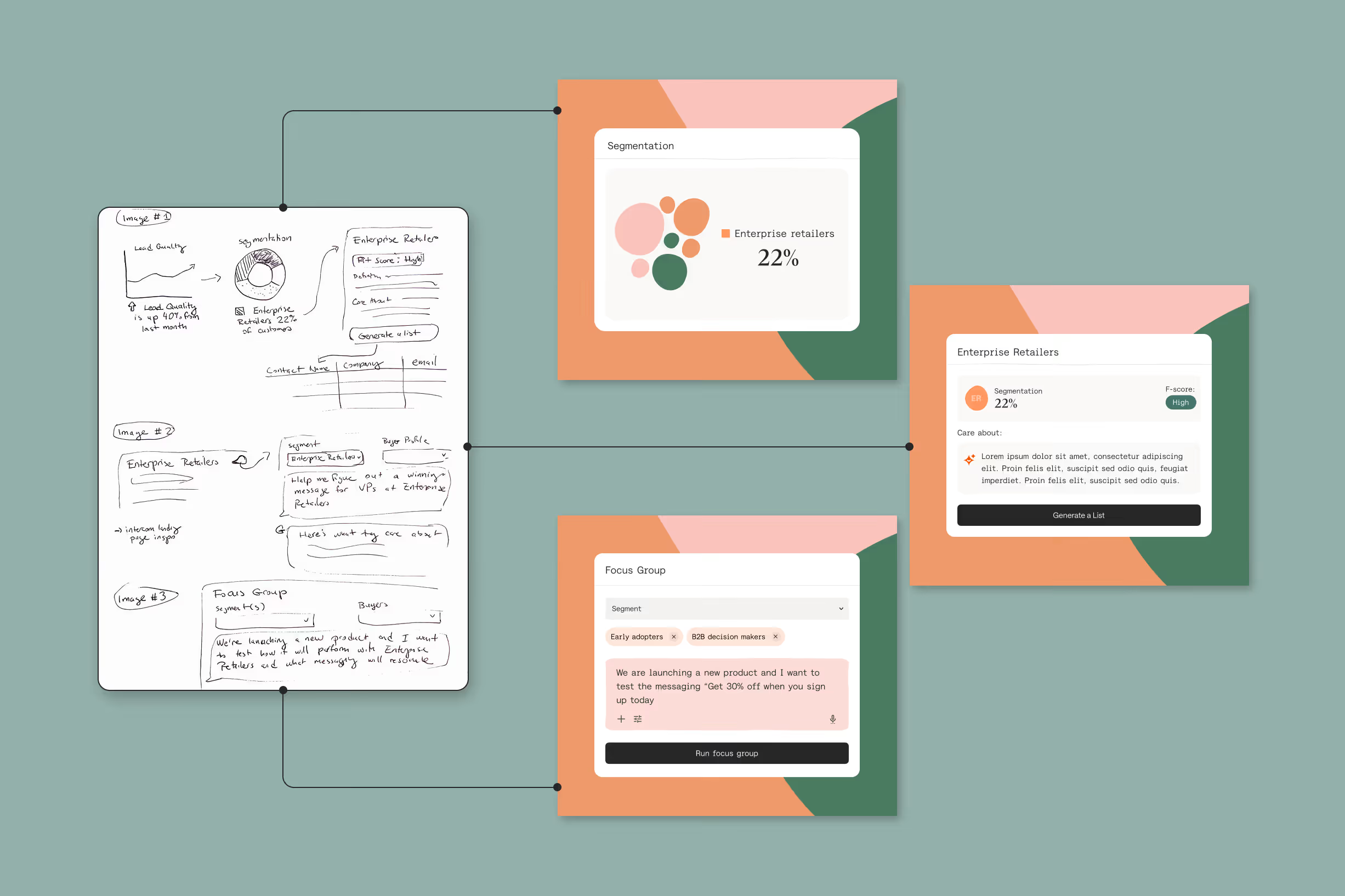
When we worked on the visual system for GoodWork, an AI marketing platform for CRM segmentation, the goal wasn’t polish for polish’s sake. It was to make the experience feel human at first glance.
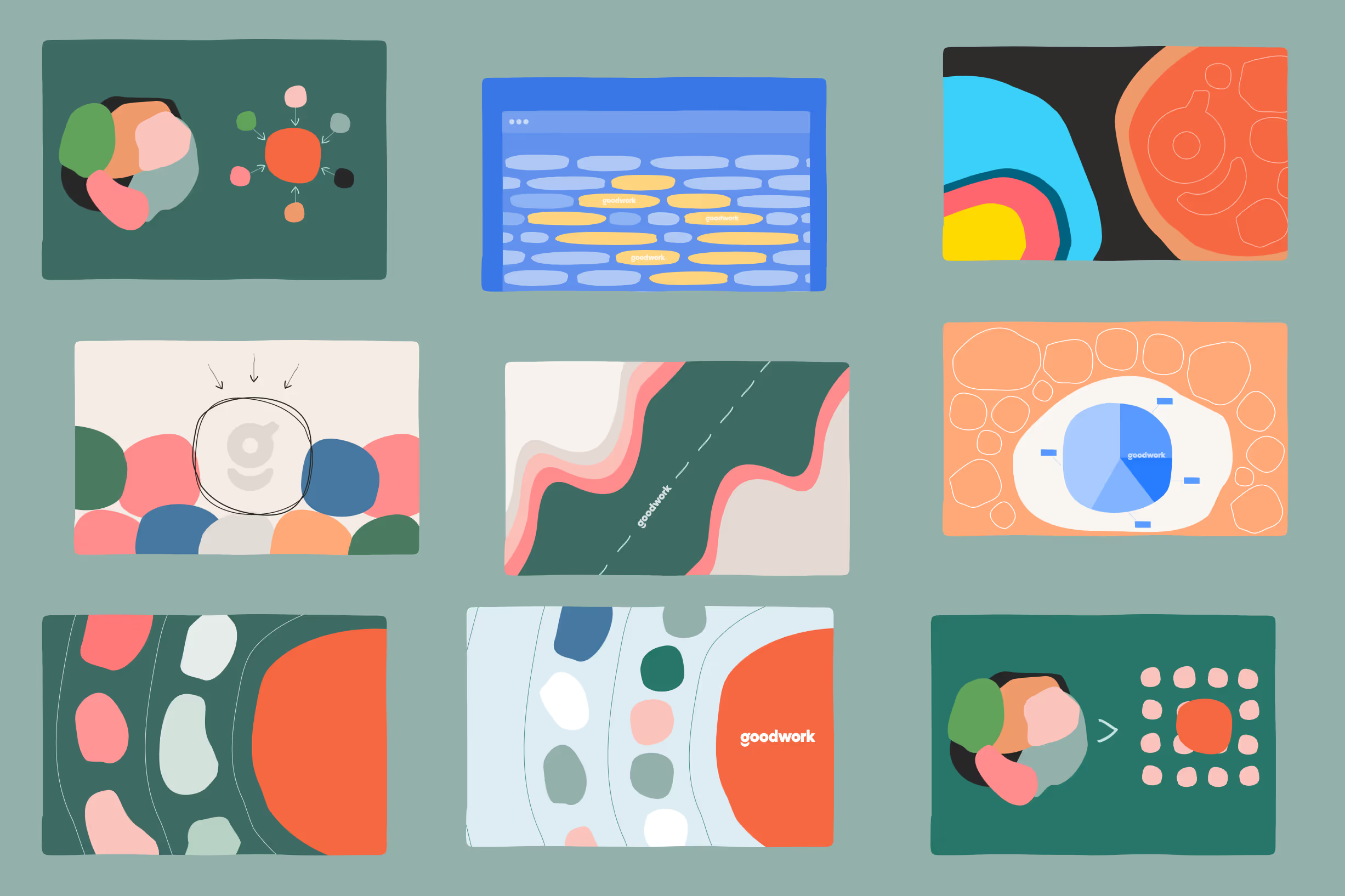
That meant moving away from perfectly uniform shapes and mechanically precise lines. Instead, we introduced subtle imperfections with digitally drawn forms, line weights that vary slightly, and shapes that feel innate, not generated.
As Composite's Creative Director Jon put it:
“One thing we focused on with GoodWork was bringing in imperfection. We used digitally drawn lines with inconsistent widths to make the work feel more natural, friendly, and approachable.”
Those choices weren’t decorative, they were intentional UX decisions.
The moment a user lands on a page, they start forming assumptions. Perfect symmetry and hyper-clean illustration systems often signal efficiency, distance, and scale. Imperfect visuals signal care, presence, and authorship.
In an AI-optimized world, that distinction matters. When so much content feels generated, small visual irregularities become cues of humanity. They help users feel oriented, welcomed, and more willing to engage.
This kind of treatment doesn’t fight clarity. It supports it by making the experience feel designed for people first, not machines. See how these ideas took shape in our featured project page for GoodWork.
Bring Back Intentional Friction
Not all friction is bad. Some of it helps people think. AI optimization often removed pauses, transitions, moments of confirmation, and opportunities for reflection and comprehension.
To restore balance:
- reintroduce moments that slow users down on purpose
- give people space to understand before acting
- design checkpoints that reinforce trust
Speed without understanding doesn’t feel helpful, it just feels rushed.
Make Your Point of View Obvious
AI rewards consensus language. Humans remember conviction. If your site could belong to any company in your category, that’s the problem. To feel human again, take a stance. Say what you believe and explain what you don’t do. Choose specificity over coverage.
Distinctiveness is not decoration. It’s usability.
Optimize for Being Remembered, Not Just Indexed
AI will find you if your structure is sound. Humans will remember you if your experience has voice, perspective, emotional contrast, and clarity of intent. The goal isn’t to outsmart machines, but to design experiences that still feel designed for people.
Memorability isn’t just about what people read or see. It’s also about how an experience behaves over time. Motion, when used intentionally, reinforces rhythm, tone, and emotional pacing in ways static design can’t. We applied this same thinking to motion in our designs for GoodWork, using subtle timing and softness to reinforce approachability rather than precision.
Human UX Was Never Anti-AI
It was just deprioritized. The next generation of websites won’t feel human because they ignore AI, they’ll feel human because they refuse to let optimization erase meaning. That’s the work now.
Want your website to feel human again?
We share thoughtful insights on UX, identity, and AI-ready systems, and help teams design websites that balance clarity, personality, and structure. Explore our services or reach out to start a conversation.