For years, experience design revolved around user intent.
What does the user want?
What task are they trying to complete?
What problem are they solving?
In 2026, that question was quietly split in two. UX designers are no longer designing only for human intent. We are designing for machine intent as well.
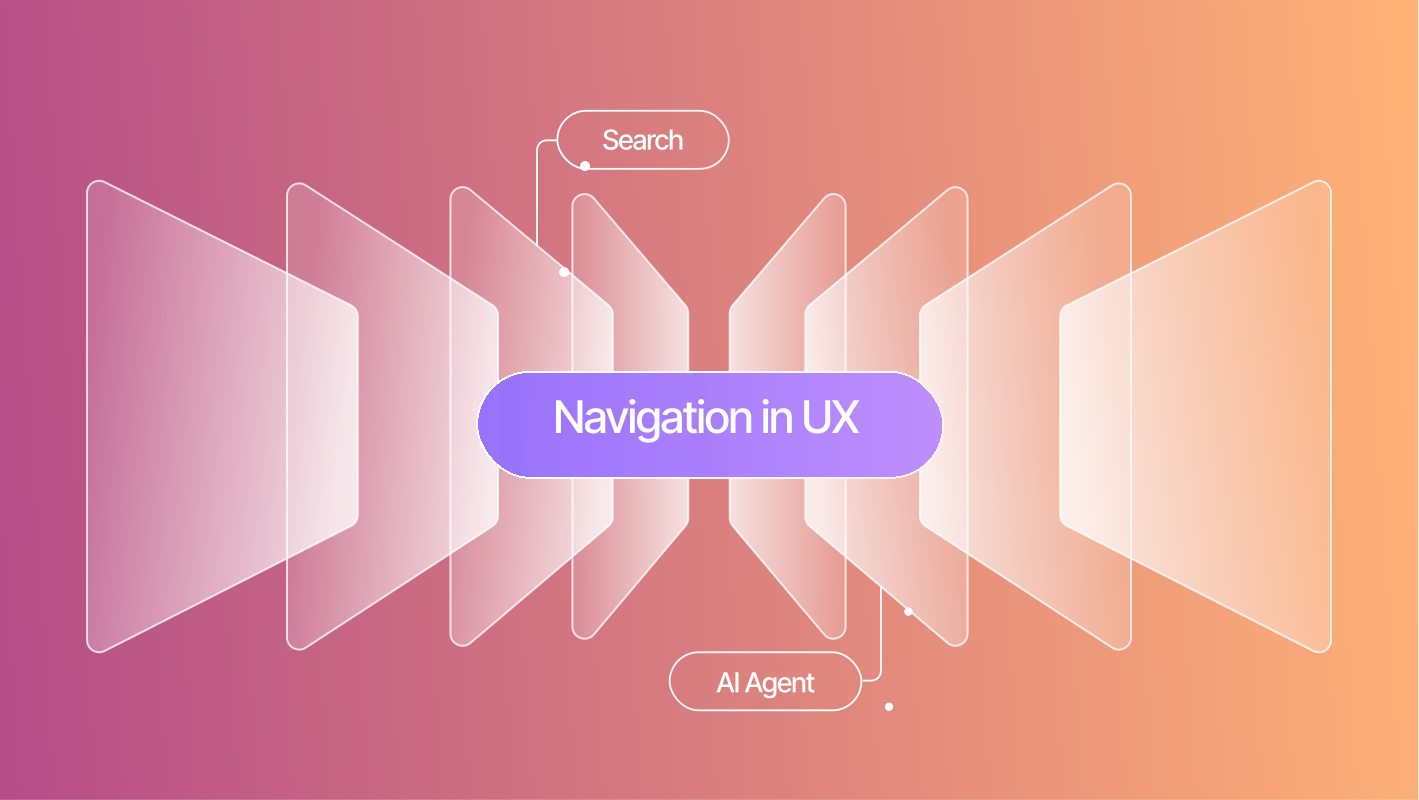
AI systems interpret pages, algorithms infer behavior, and agents summarize, predict, and retrieve. They decide what to surface, what to recommend, and what to collapse into a single sentence. Modern experience design now negotiates between two interpreters: the human and the machine. And they do not read the same way.
The Rise of Machine Intent
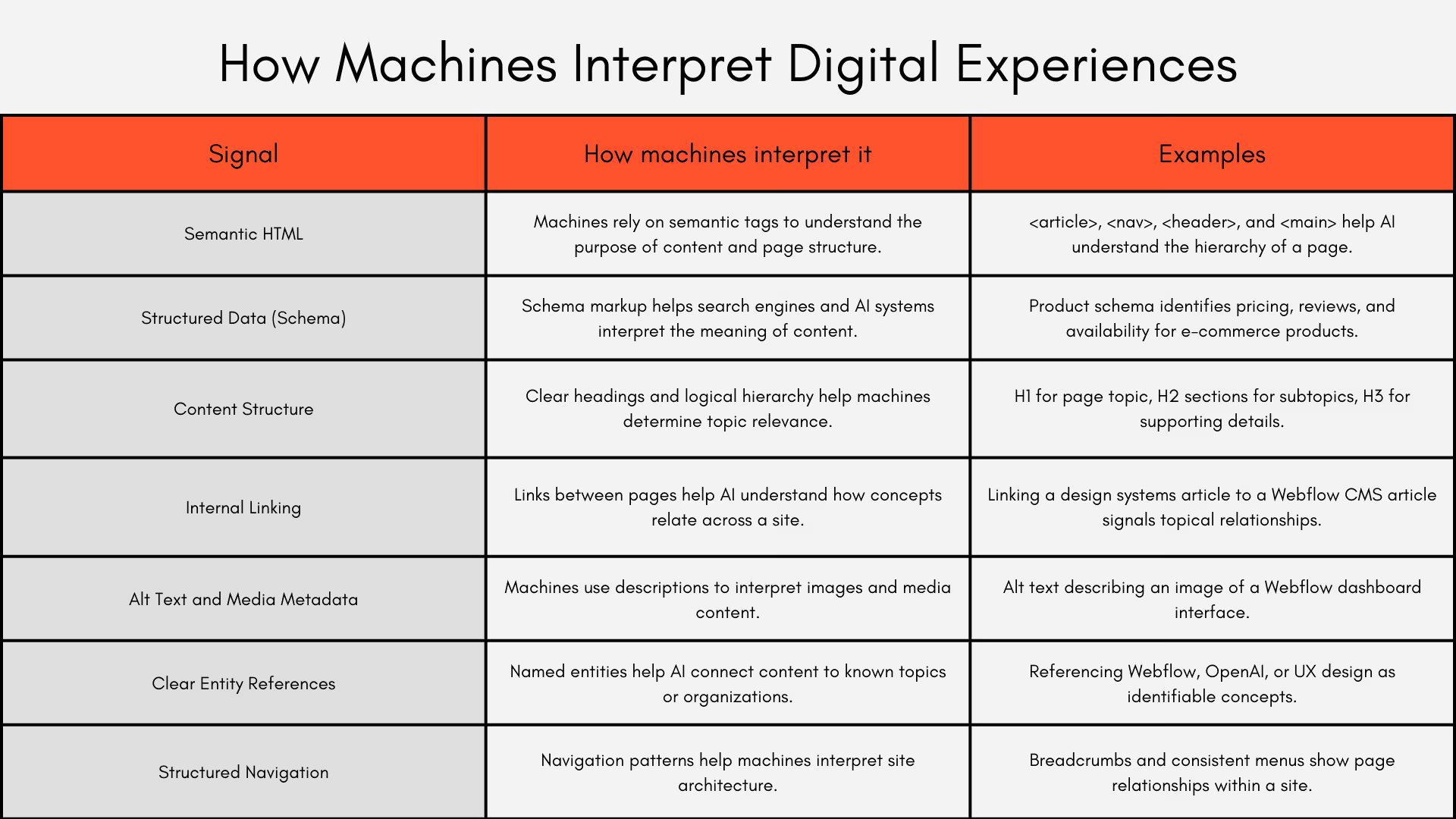
Machines do not “understand” the way people do. They infer based on structure, repetition, hierarchy, and patterns. They weigh probabilities and compress nuance into signals. From that, they decide what a page is about, what a brand offers, who something is for, and what action matters most.
Search engines once did this quietly. Now AI agents do it actively. They summarize pages, answer questions on behalf of brands, and recommend products, services, and solutions without users ever visiting the site.
This means that intent is being interpreted before a human even sees the interface. Design is no longer just about guiding behavior. It’s about shaping how your experience is read by a system that acts on your behalf.
The Gap Between Inferred and Felt Intent
Here’s the tension: humans are inconsistent. They browse without clarity and explore without urgency. They hesitate and change their minds. Machines, however, prefer clarity. They reduce ambiguity. They classify. When systems infer intent too aggressively, something subtle breaks.
You see it when recommendations feel slightly off, summaries miss nuance, personalization feels presumptive, or navigation feels overly optimized. The machine sees patterns while the human feels friction. That gap is where trust erodes, not because the system failed technically, but because it misunderstood context. And that misunderstanding is now part of experience design.
Designing for Dual Intent
Designers in 2026 have to think in layers. Not just “What does the user want?” But “What will the system assume they want?” These are not always aligned. Intent-based design now requires mapping three dimensions:
- Explicit intent
What a user directly communicates through a search query, form input, or request. - Behavioral intent (implicit signals)
What systems infer from interactions like clicks, dwell time, navigation paths, and past activity. - Emotional context
The confidence, uncertainty, curiosity, or hesitation someone experiences while navigating an interface.
The first two are measurable through data and analytics. The third is where UX judgment lives. Strong experience design ensures that machine interpretation reinforces human meaning rather than distorting it. That means:
- Clear hierarchy so agents don’t misclassify your content.
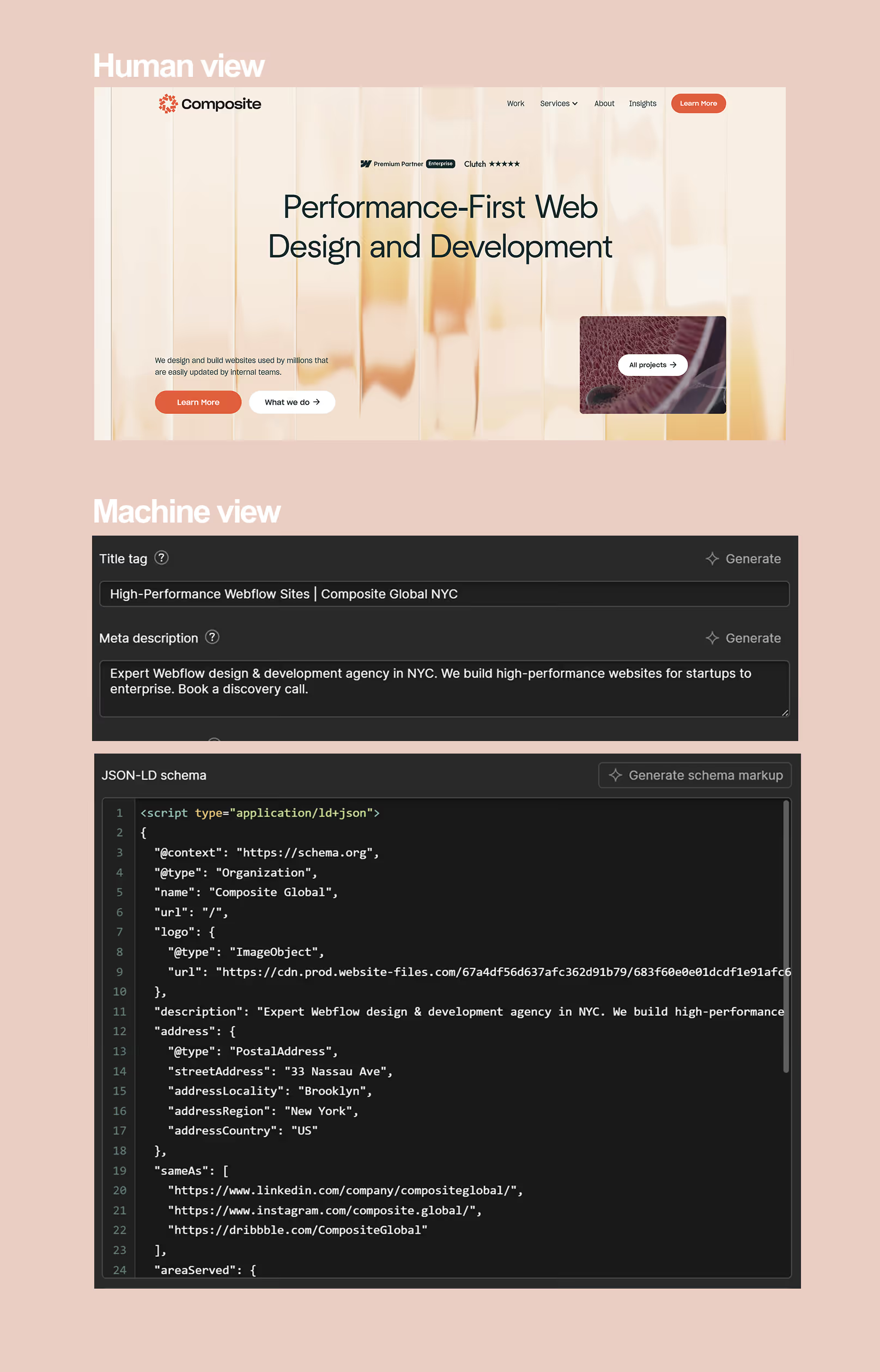
- Structured data so machines can quickly understand each page.
- Explicit labeling so summaries remain accurate.
- Focused messaging so recommendations don’t flatten your positioning.
- Reduced competing signals so both humans and machines know what matters.
This isn’t about optimizing for algorithms at the expense of users. It’s about building clarity that holds up under interpretation
When Intent Design Improves Trust
When done well, designing around intent does not feel mechanical. It feels supportive.
Users experience less ambiguity, more relevant discovery, greater confidence in where they are, and fewer moments of hesitation. AI systems experience cleaner structure, stronger semantic signals, more reliable summaries, and more accurate categorization.
The key is restraint. Just because a system can predict doesn’t mean it should decide. Sometimes friction is respect, exploration is intentional, and ambiguity is part of meaning.
Designing for machine intent should not eliminate human nuance. It should expose where clarity is missing and strengthen it.
Experience Design Is Now Interpretive Design
The most important shift is philosophical. Experience design used to be about flow, now it is about interpretation. How will this page be read? By a person? By an agent? By both?
For a modern design agency, this question now sits at the center of digital work. The goal is not to make everything machine-friendly. It is to ensure that when machines interpret your content, they reinforce your intention instead of reshaping it.
That requires judgment. In 2026, designing for intent means designing for understanding across interpreters. Whether you are a Webflow agency structuring content systems or a brand shaping its digital presence, the challenge is the same: clarity that holds up under interpretation.
The best experiences will not just convert. They will hold meaning, no matter who reads them first.
Want your brand to be recommended by AI and trusted by the humans who verify it?
We are a dedicated Webflow agency based in NYC, sharing weekly insights on AI-readiness, human-centered UX, and discoverability. View our websites designed for clarity, performance, and long-term growth.