For years, website platforms were defined by how efficiently they allowed teams to build and publish pages. That model is starting to break down. What Webflow’s latest updates reveal is not just a faster way to design, but a fundamentally different idea of what a website is.
Across dozens of releases, a pattern emerges. Webflow is no longer behaving like a visual builder layered on top of a CMS. It is evolving into a system that manages content, logic, optimization, and increasingly, intelligence. The implication is subtle but important. Websites are becoming operational systems rather than static outputs.
This shift changes how teams design, build, and maintain digital experiences.
At Composite, a dedicated Webflow agency, we work with teams navigating this exact shift, designing and developing systems that scale across UX, content, and performance. As a UX design agency in NYC, our approach spans UX strategy, Webflow development, and technical SEO, helping companies move beyond page-based design toward structured, high-performance experiences.
Explore our development services like migrating websites like Wordpress to Webflow and integrating platforms like Hubspot and Shopify into your Webflow site.
From Pages to Systems: The Rise of Component-Driven Design
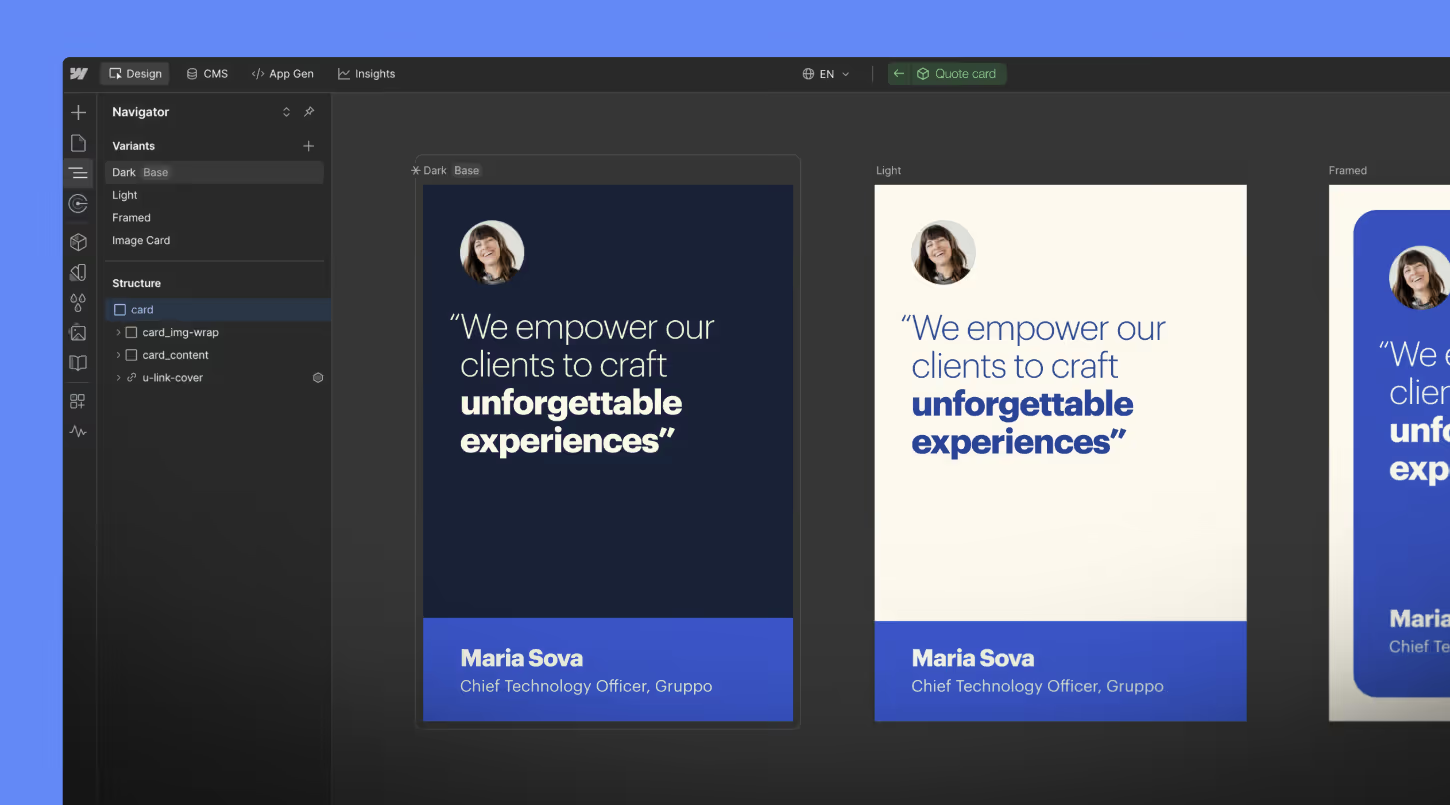
One of the most telling updates is the rollout of Component Canvas, alongside expanded conditional logic and structured content controls. These features move Webflow away from page-centric design and toward reusable, system-based architecture.
Instead of designing isolated pages, teams are encouraged to build modular systems that adapt across contexts. Components become the primary unit of design, while logic determines how they behave across different scenarios. This aligns closely with how modern design systems operate, but it brings that thinking directly into the website layer.
For a UX design agency NYC, this is not just a tooling improvement. It fundamentally changes how design scales. Systems become easier to maintain, easier to evolve, and more resilient as content grows. It also reduces the gap between design intent and implementation, since the system itself lives inside the platform.
This is where Webflow begins to resemble infrastructure rather than software.
AI Moves From Experimentation to Workflow Integration
Webflow’s AI updates are easy to misinterpret if viewed individually. An evolved AI site builder, workspace-level AI controls, and role-based access to AI features might seem incremental. Taken together, they suggest a different trajectory.
AI is no longer positioned as a one-off generation tool. It is becoming embedded into workflows, governance, and content systems. Teams can now control who uses AI, how it is applied, and where it fits within production environments. That level of control signals maturity.
The deeper implication is that AI depends on structure. Without clean content models, consistent components, and predictable systems, AI cannot operate effectively. This reinforces the importance of building websites with structured CMS architectures and intentional design systems.
A modern Webflow agency increasingly needs to think about AI not as a feature, but as a layer that interacts with every part of the site. Content, layout, and logic all become inputs into that system.
Native Personalization Becomes Part of the Platform
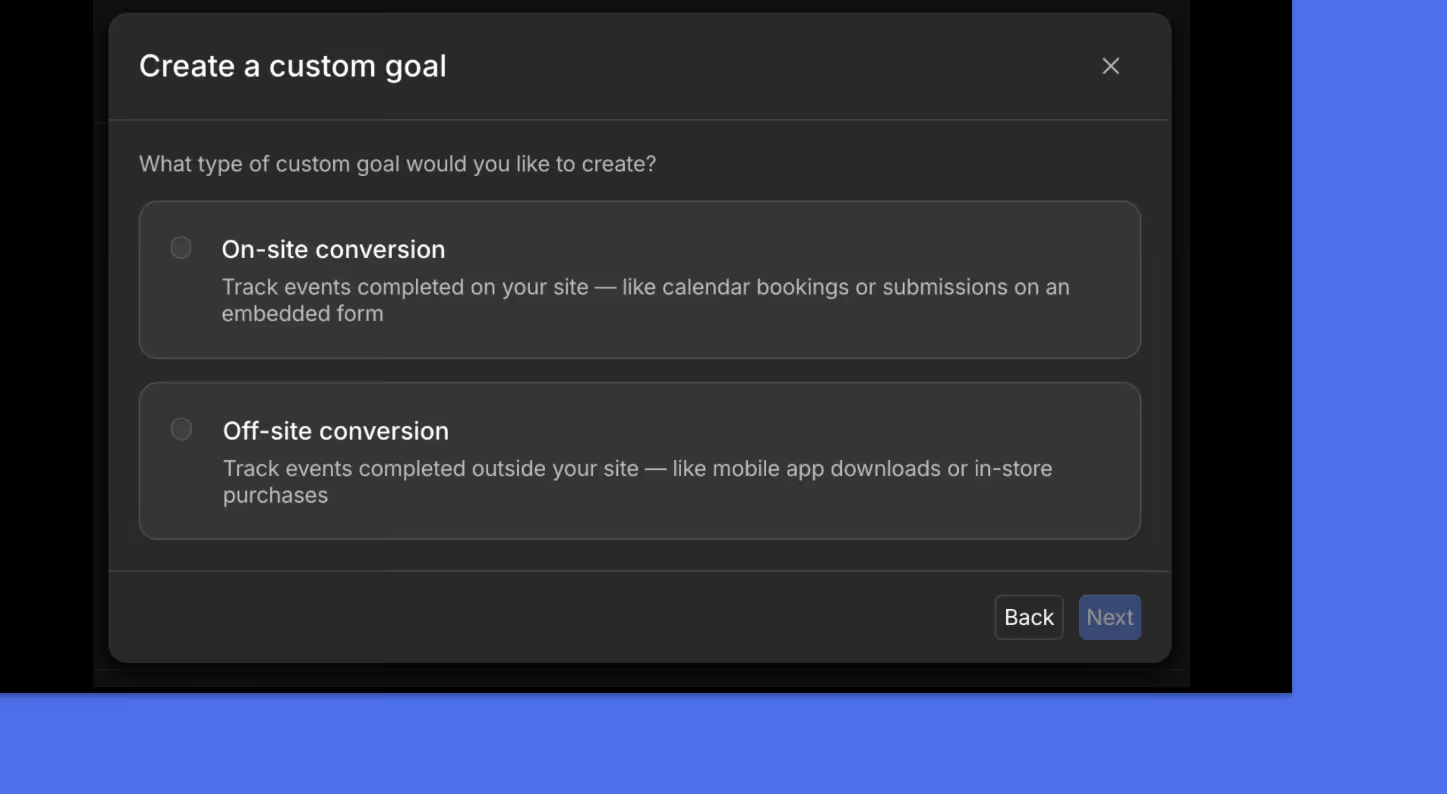
Another cluster of updates focuses on audience filtering, custom goals, and enhanced Analyze and Optimize capabilities. These features point toward something that traditionally lived outside of Webflow: personalization.
Historically, personalization required external tools, complex integrations, or engineering-heavy setups. Webflow is now bringing elements of that directly into the platform. Teams can define audiences, adjust experiences, and measure outcomes without leaving the environment where the site is built.
This introduces a new model for UX. Instead of designing a single canonical experience, teams design systems that adapt to user behavior. The website becomes responsive not just to screen size, but to intent, context, and interaction history.
For companies working with a web agency, this changes the conversation from page design to experience orchestration. The question is no longer what a page looks like, but how it behaves across different user segments.
The Website Stack Is Collapsing Into a Unified Platform
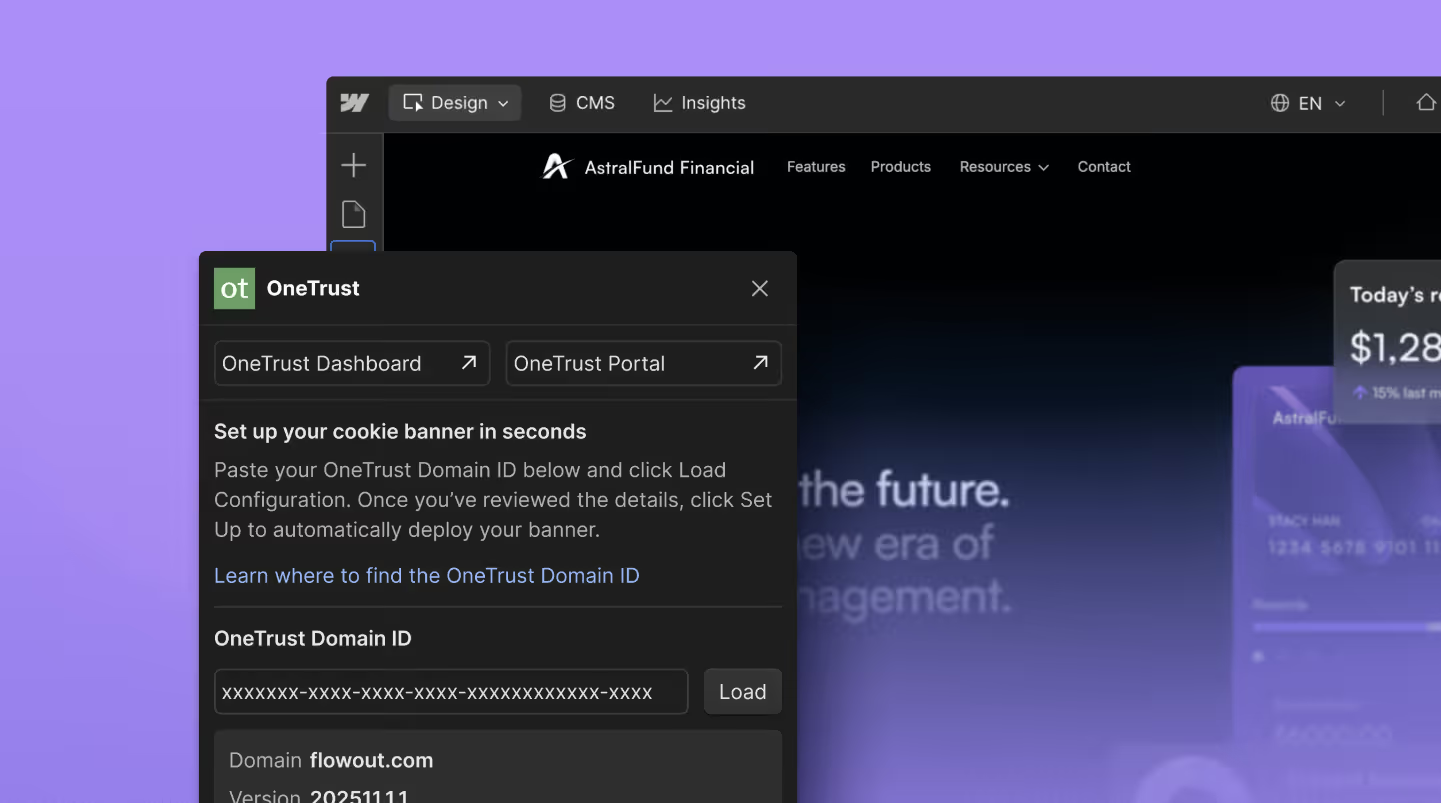
The introduction of a plugin marketplace, integrations like OneTrust and Adobe Marketo Engage, cloud enhancements, client seats, and workspace audit logs all point in the same direction. Webflow is expanding horizontally, absorbing responsibilities that previously required separate tools.
Compliance, collaboration, extensibility, performance, and now deeper marketing automation integrations are becoming native concerns within the platform. This reduces fragmentation, but it also raises expectations. The website is no longer just a frontend layer. It is where multiple operational functions converge.
This consolidation is one of the main reasons companies choose to migrate to Webflow. Managing fewer tools means fewer inconsistencies, fewer integration points, and more control over performance and governance.
From a development perspective, this is where strategy matters. Teams need to understand how to structure systems inside Webflow so that they remain flexible as the platform continues to expand.
This is often where working with a specialized team becomes critical, particularly when implementing scalable architectures through platforms like Webflow.
The End of the Legacy Editor Signals Standardization
The deprecation of the legacy Editor (which will no longer be available starting August 4th, 2026) might seem like a routine cleanup. In reality, it reflects a broader effort to standardize how content is created and managed.
As platforms evolve, maintaining multiple editing paradigms becomes unsustainable. By consolidating around a single, more powerful system, Webflow is pushing teams toward more structured and consistent workflows. This aligns with the broader trend toward system-based content management.
For content teams, this introduces both friction and opportunity. There is a learning curve, but the payoff is greater control and scalability. Content becomes more predictable, easier to govern, and better suited for integration with AI and personalization systems.
What This Means for Modern Web Teams
Taken together, these updates redefine what it means to build and manage a website. The focus shifts from output to system design. Teams are no longer just publishing content, they are managing interconnected layers of logic, structure, and behavior.
This requires a different mindset. Design becomes about systems rather than screens. Development becomes about architecture rather than implementation. Content becomes structured data rather than isolated entries.
A modern web design agency in New York is increasingly expected to operate at this level. Not just delivering visual design, but designing the underlying systems that enable scalability, adaptability, and performance.
This is a higher bar, but it is also where differentiation happens.
Where This Is Going: The Autonomous Website
The direction is becoming clear. Websites are moving toward a model where they can adapt, optimize, and evolve with minimal manual intervention. AI plays a role, but only within the context of well-structured systems.
Webflow’s recent updates lay the groundwork for this future. Components define structure, logic defines behavior, AI assists execution, and analytics guide iteration. Together, they form a feedback loop that begins to resemble autonomy.
This does not mean websites will run themselves entirely. It means the role of teams will shift. Less time spent on repetitive tasks, more time spent designing systems that can scale intelligently.
More complexity under the surface. More simplicity in the experience.
If you are starting to rethink how your website operates, not just how it looks, this is the moment to take a step back and evaluate your foundation. The tools are changing, but more importantly, the expectations are changing with them.
A thoughtful system today will determine how adaptable your experience is tomorrow. View all of Webflow’s latest updates for a deeper look at each new addition.
More features do not guarantee a better system.
If you are rethinking how your website operates, not just how it looks, we are a New York based Webflow agency designing structured, scalable experiences built for performance, adaptability, and AI-readiness.