For years, building websites was constrained by time. Design required iteration, development required precision, and launching something new often took weeks or months. That constraint, while frustrating, created space for thinking. Teams had to make deliberate decisions about structure, hierarchy, and experience.
That constraint is disappearing.
With platforms like Webflow and a variety of AI design tools, websites can now be generated, assembled, and launched faster than ever. Layouts appear instantly, components can be reused or remixed, and entire pages can be scaffolded in seconds. Speed is no longer the bottleneck.
But something else is.
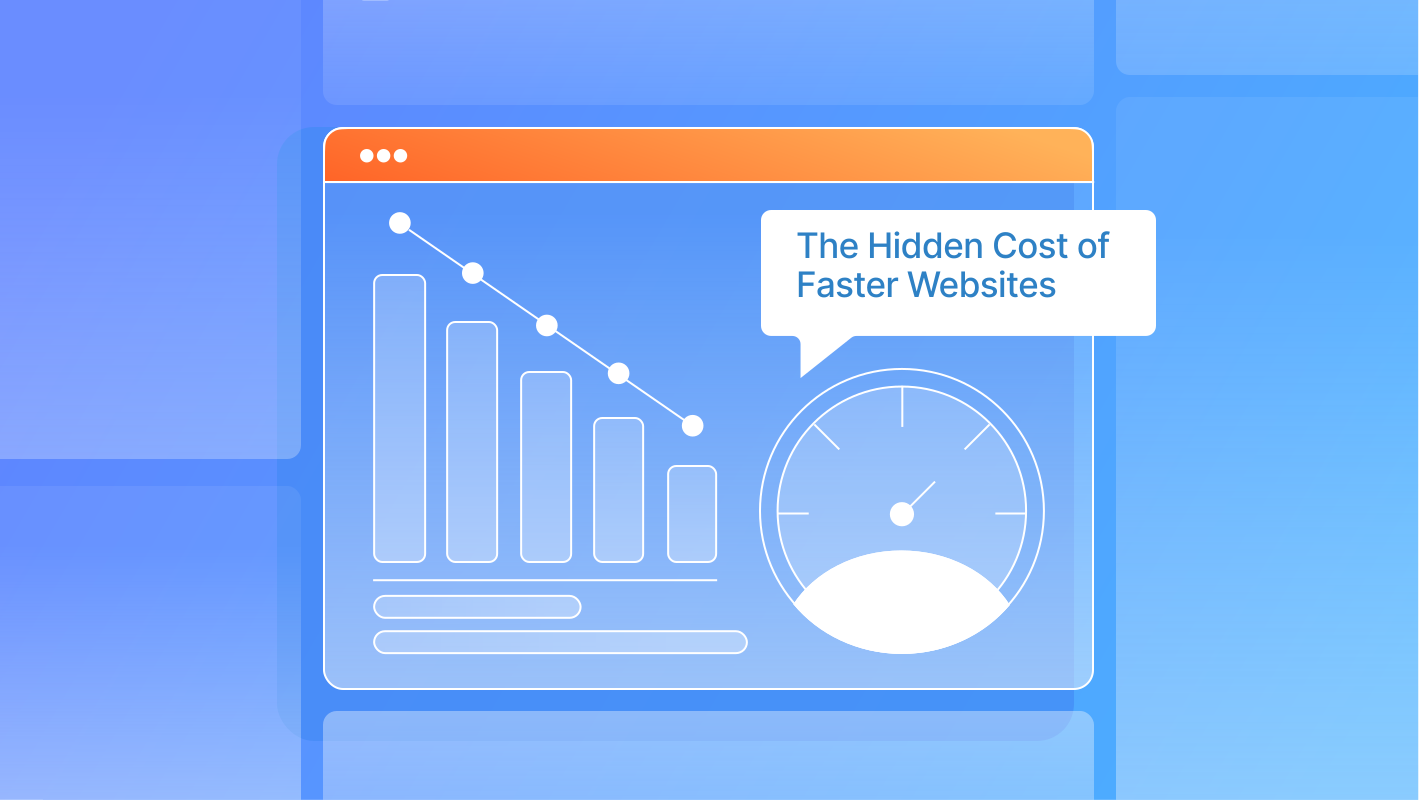
Speed Is Not Producing Better UX
Faster production should lead to better outcomes. More iteration, quicker feedback loops, and lower friction should, in theory, improve the quality of digital experiences.
In practice, the opposite is often happening.
As production accelerates, the depth of thinking behind each decision tends to shrink. Teams move quickly from idea to output without fully resolving questions around structure, hierarchy, or intent. The result is not broken websites, but shallow ones. Experiences that function, but do not guide. Interfaces that look complete, but lack clarity and direction.
Speed is increasing output, but it is not necessarily improving outcomes.
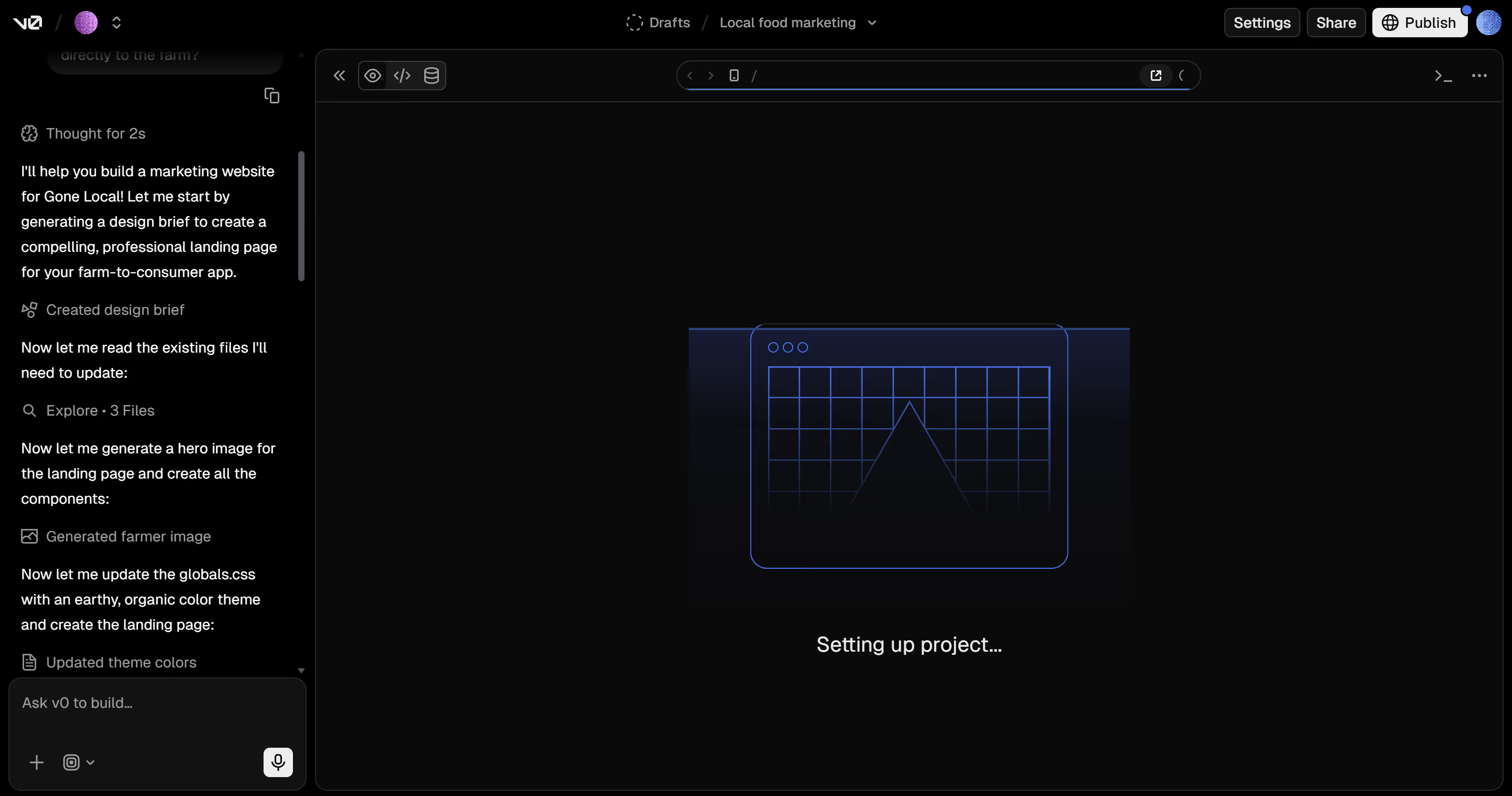
We Tried Vercel v0 So You Don’t Have To
One of the clearest examples of this shift comes from tools like Vercel v0. These tools can generate layouts and components almost instantly, translating prompts into usable interface patterns with surprising accuracy.
They are particularly good at copying what already exists.
Common layouts, familiar UI patterns, and standard interaction models are reproduced quickly and efficiently. For teams looking to move fast, this is useful. It reduces the effort required to get from concept to something that looks like a product.
But the limitations become clear just as quickly.
Original thinking is harder to generate. Structure is often shallow. Hierarchy is implied rather than intentional. Over time, everything begins to feel template-driven, even when the output is technically correct.
The takeaway is simple. These tools are helpful for speed, but they are not a replacement for design thinking.
The Rise of Template Thinking
This is where the real problem begins to take shape.
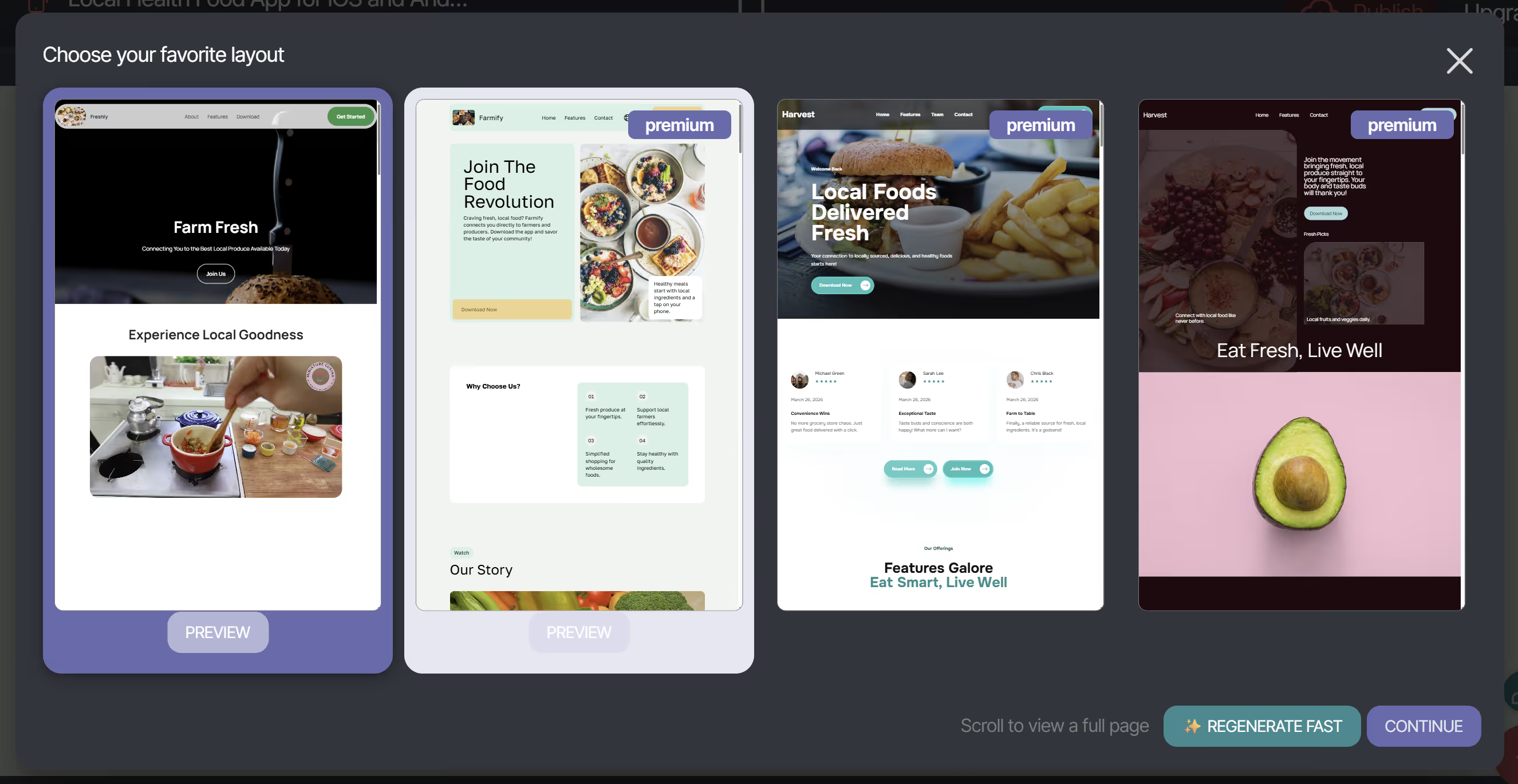
AI tools are trained on existing patterns. They remix, recombine, and reproduce what has already been done. This makes them effective at generating familiar structures, but less effective at creating new ones.
As teams rely more heavily on these tools, a subtle shift occurs. Instead of designing from first principles, they begin selecting from variations of known patterns. Decisions become implicit rather than explicit.
The result is a growing sameness across digital experiences. Pages look polished, but interchangeable. Layouts feel correct, but not intentional. UX becomes a layer of assembly rather than a process of design.
The Emergence of UX Debt
This pattern introduces a new kind of problem. Not technical debt, but something closer to design debt.
UX debt accumulates when decisions about structure, hierarchy, and clarity are deferred or overlooked. It does not break a site immediately. It builds gradually, showing up as friction, confusion, or inconsistency over time.
Examples are easy to spot. Pages that try to do too much without clear prioritization. Navigation systems that expand without logic. Content that exists, but is difficult to understand in context.
As speed increases, this type of debt accumulates faster. More pages are created, more components are added, and more decisions are made implicitly rather than intentionally.
Why This Hits Webflow Teams Specifically
Webflow is one of the platforms most affected by this shift, and also one of the most capable of addressing it.
On one hand, Webflow enables rapid development. Teams can design, build, and launch without the constraints of traditional development workflows. This makes it an ideal environment for speed.
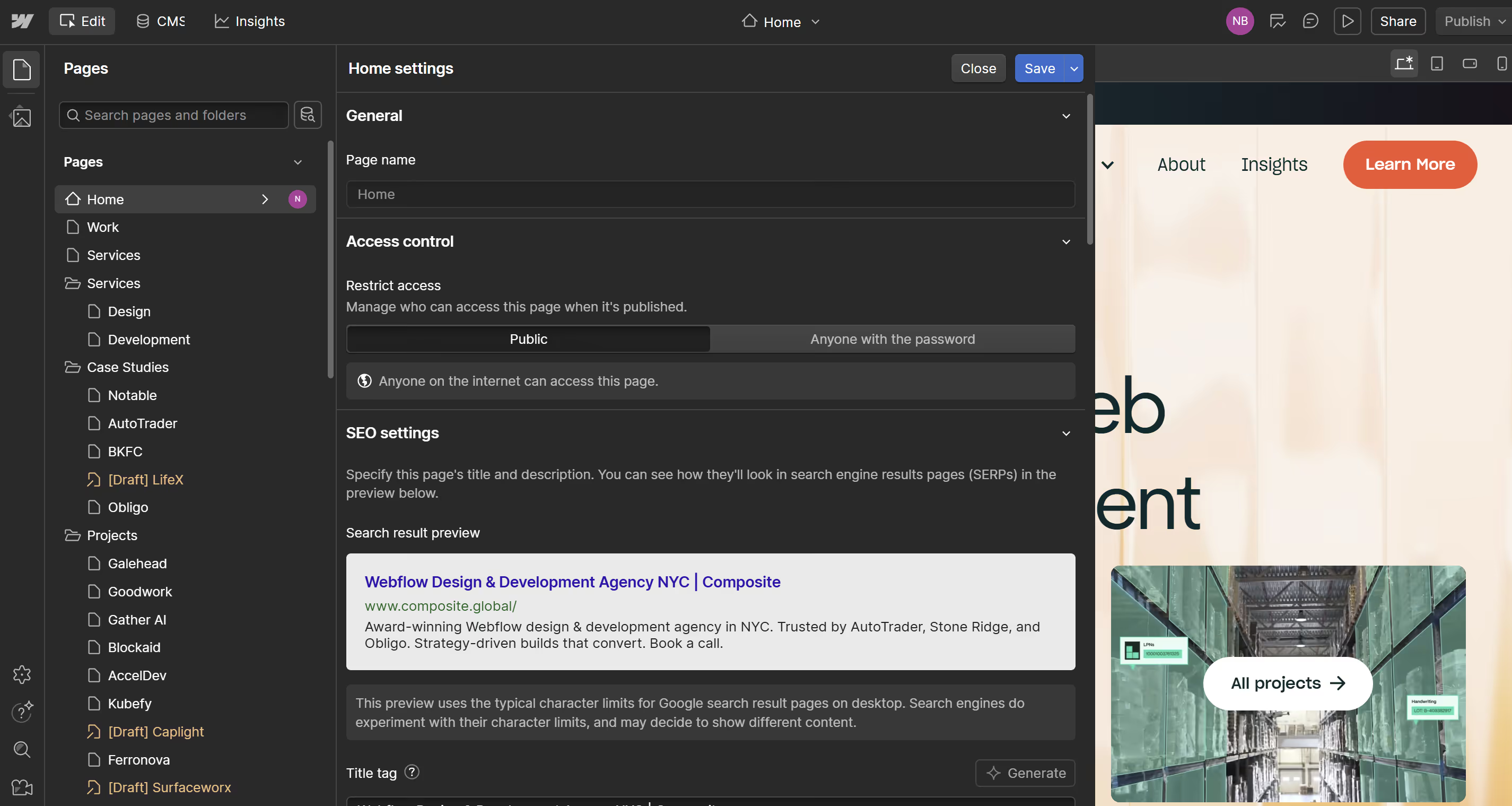
On the other hand, Webflow exposes structure. CMS collections, component systems, and layout hierarchies are visible and editable. When these systems are well designed, they create clarity and scalability. When they are not, they amplify inconsistency.
For a Webflow agency, this is where the work becomes more strategic. The platform does not enforce good structure. It enables it. The difference comes from how intentionally the system is designed.
What Strong Teams Do Differently
The teams producing the best work in this environment are not the fastest. They are the most deliberate.
They use speed as a tool, not a default. They move quickly where it makes sense, but slow down when decisions impact structure, hierarchy, or long-term maintainability. They define content models before populating them. They design systems before scaling them.
This is where the role of a UX design agency becomes more important. Not to slow teams down, but to ensure that speed does not replace thinking.
Good UX is not a byproduct of faster tools. It is the result of better decisions.
Where This Is Going: Speed vs Intent
The trajectory is clear. Tools will continue to make building faster. AI will continue to generate layouts, components, and content with increasing accuracy. The cost of production will continue to decrease.
But this does not guarantee better experiences.
The constraint is no longer technical. It is cognitive. It is the ability to define what should be built, how it should be structured, and why it should exist in the first place.
A modern web design agency is not defined by how quickly it can ship. It is defined by how well it can maintain clarity in an environment that increasingly favors speed.
More Speed Does Not Guarantee Better Experiences
If you are rethinking how your website is structured, how decisions are made, and how your system evolves over time, we are a dedicated Webflow agency designing experiences that prioritize clarity, hierarchy, and long-term performance. We help teams migrate to Webflow and future-proof their websites.