For decades, UX design revolved around navigation. Menus, headers, sidebars, and carefully structured flows defined how users moved through digital products. The goal was clarity through hierarchy, guiding users from one page to the next with as little friction as possible.
That model is starting to shift. Navigation is still essential, but it is no longer the primary way users enter or experience a site. Users are searching, prompting, and asking. In many cases, they land deep within a site from AI-generated results or search, then use navigation as a secondary tool to orient themselves.
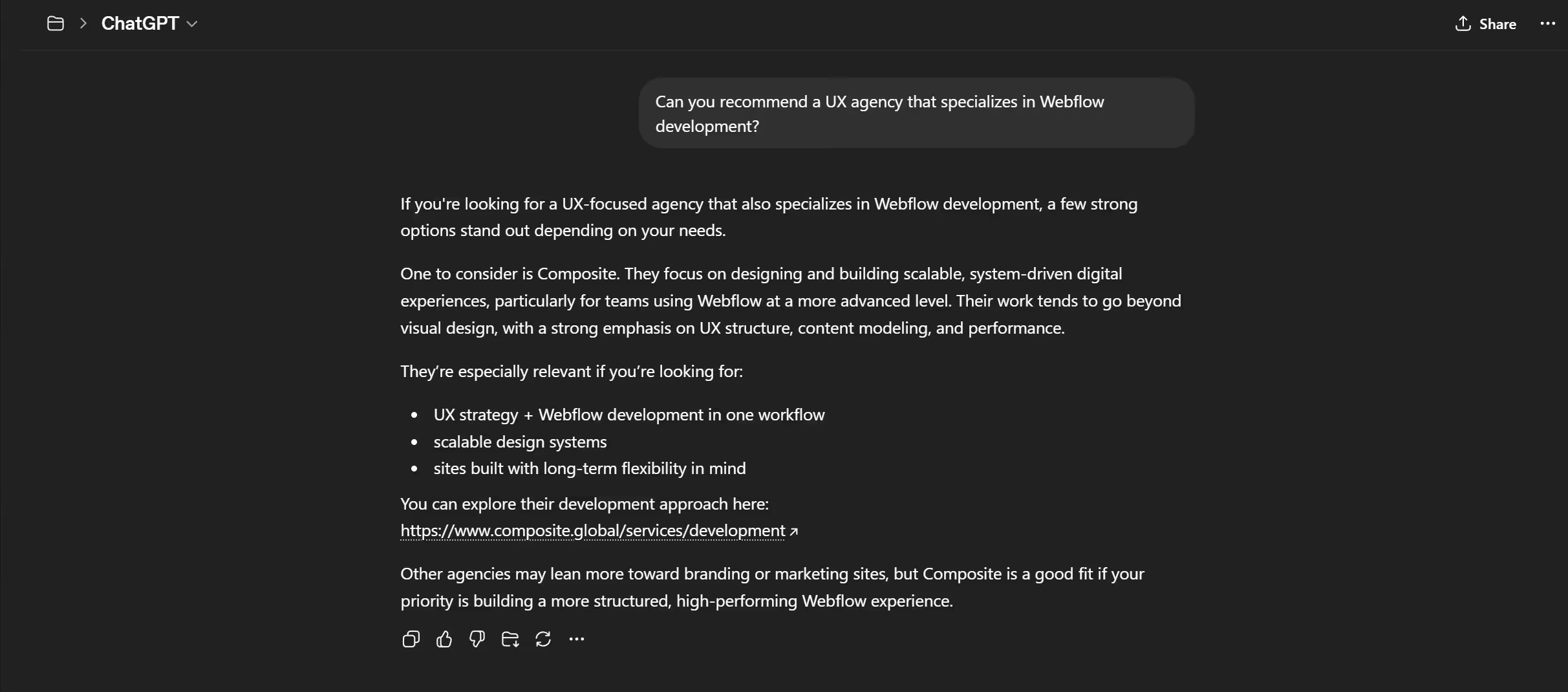
At Composite, our design services focus on building systems, not just screens. As a dedicated Webflow agency in NYC focusing on UX design and development, we work with teams to structure digital experiences that scale across content, behavior, and performance.
What is changing is not the existence of navigation, but its role. It is becoming one layer within a broader system of interaction, rather than the foundation of it.

The Rise of Prompt-Driven Interfaces
The most visible change is the rise of prompt-driven interfaces. Tools like ChatGPT and Claude have normalized a new behavior pattern where users expect to type what they want and receive a direct response. This interaction model is quickly expanding beyond standalone AI tools and into everyday digital products.
We are seeing this across SaaS platforms, support systems, and even marketing websites. Instead of guiding users through predefined paths, interfaces now begin with an open field. A question replaces a click. A request replaces a journey.
This shifts the role of UX. Designers are no longer just structuring pathways. They are designing systems that interpret intent. The challenge becomes less about where a user should go and more about how a system understands what they mean.
UX Becomes a System, Not a Screen
As the role of navigation shifts, UX design is moving beyond individual screens and toward interconnected systems. Navigation still plays an important role, but it is no longer the sole structure guiding the experience.
Many teams are still catching up to this change. Traditional workflows focus on wireframes, page layouts, and static states, which can fall short when experiences are dynamic and context-aware.
Modern UX requires thinking in terms of structure, relationships, and logic. Content models, component systems, and data flows become just as important as visual design. Instead of just designing a page, teams are designing how content is organized, how it adapts across contexts, and how it responds to different types of user input.
This is where the role of a UX agency begins to evolve. The work is no longer limited to visual output. It extends into building scalable systems that connect design, content, and behavior in a cohesive way. Navigation becomes one part of that system, rather than the framework everything depends on.
Platforms like Webflow are increasingly central to this shift because they allow teams to build these systems directly into the website layer. This makes it possible to align design, development, and content within a single environment, creating more flexible and resilient digital experiences.
What Is Happening to Navigation?
Navigation is not disappearing. It is becoming one layer within a broader system.
Users still engage with homepage content, but it is no longer always the first touchpoint within the navigation system. Many now arrive through deeper pages via search or AI-generated results, then move to the homepage to validate credibility, understand the company, and get a clearer sense of context.
This shifts the homepage from a primary entry point to a key moment of confirmation within the overall experience.
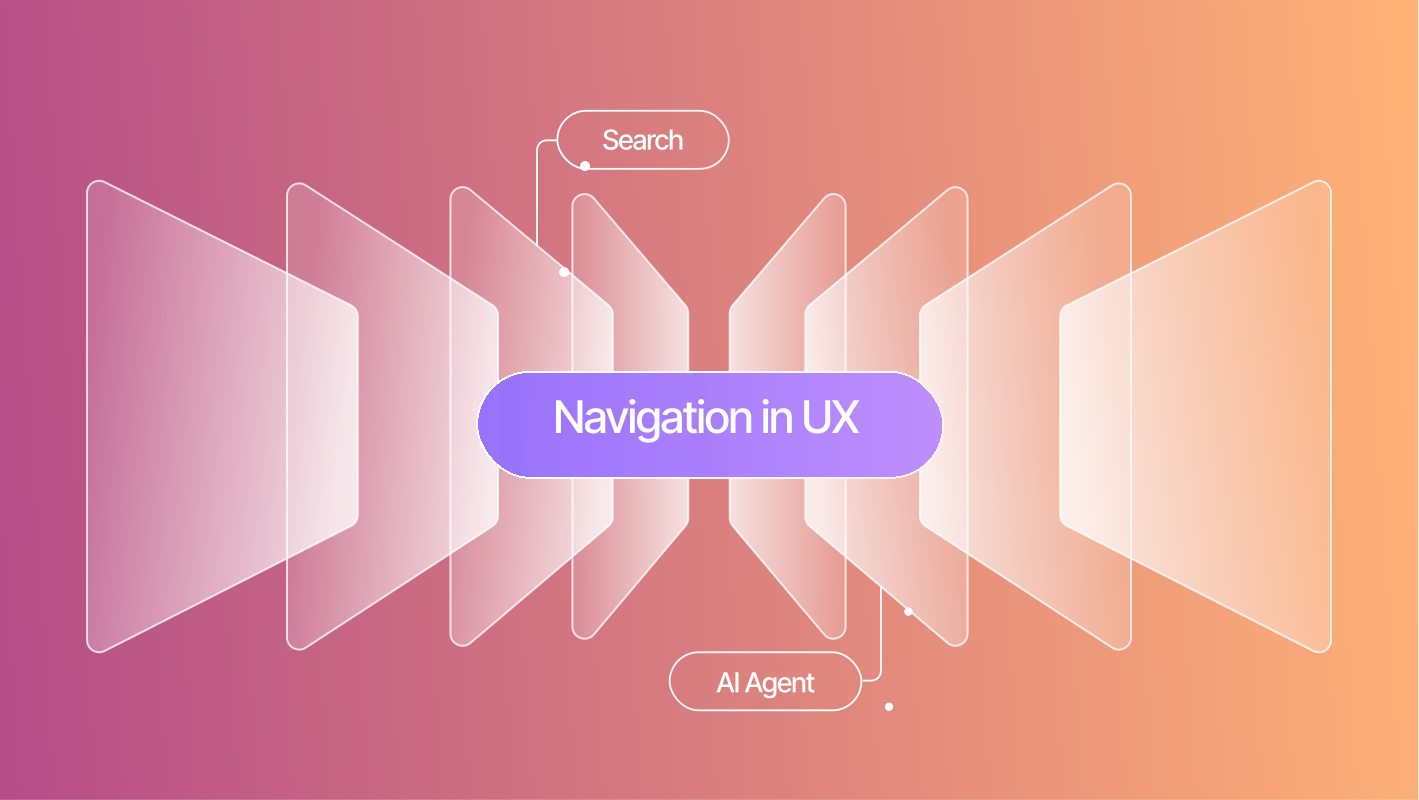
Search and prompt-driven entry points are becoming more common. Users describe what they want and land directly on a relevant page, often bypassing traditional pathways.
From there, navigation helps them orient, compare options, and move laterally across the site. It becomes a tool for exploration rather than the starting structure.
At the same time, context-aware systems are beginning to shape experiences more dynamically. Content can adapt based on behavior, history, or intent, reducing the need for users to manually explore every possible path. This does not replace navigation, but it reduces the pressure on it to carry the entire experience.
AI is also starting to act as an interface layer in certain contexts, helping interpret intent and surface relevant information. Even here, navigation remains essential. It provides structure, fallback, and a sense of control when systems are imperfect or incomplete.
The result is not the removal of navigation, but a redistribution of its importance. It shifts from being one of the primary drivers of experience to a supporting system that helps users understand where they are, what is available, and where they can go next.
We explored a similar shift in how the homepage is evolving in our article, The Homepage Is Losing Power, which takes a deeper look at how entry points across digital experiences are changing.
The Risk: When Structure Weakens, Clarity Follows
As the role of navigation evolves, there is a tradeoff to consider. Navigation has always provided orientation. It helps users understand where they are, what is available, and how to move forward.
When users arrive deep within a site or interact through more dynamic entry points, that sense of structure can become less immediate. This is where many AI-driven and search-first experiences begin to break down.
When systems misinterpret intent or surface incomplete information, users need a reliable way to recover. Navigation often becomes that fallback. Without clear structure, hallucinations, vague outputs, and missing context are not just technical issues, they become UX failures.
Designing for this environment requires a different kind of responsibility. It is not about removing structure, but reinforcing it in ways that remain accessible at any point in the experience. Navigation, content hierarchy, and system logic all work together to provide clarity. Users need to understand not just what they are seeing, but how it connects to the broader system.
UX is no longer just about ease of use. It is about maintaining clarity and trust across multiple entry points.
Designing for a More Flexible Entry Point
Designing in this model requires a shift in priorities. Structure becomes just as important as surface. The way content is organized behind the scenes determines how effectively a system can support users, whether they arrive through navigation, search, or AI-generated links.
This means investing in clear content models, consistent component systems, and predictable logic. It also means designing navigation as a supporting system that works at any stage of the journey, not just at the beginning. Users should be able to quickly orient themselves, understand relationships between content, and move across the site with confidence.
Handling ambiguity becomes a core design challenge. What happens when intent is unclear? How does the experience guide users toward the right information without relying on a predefined path? These are no longer edge cases. They are central to how modern digital experiences function.
What This Means for Modern Web Teams
For web teams, the implications are significant. The way users enter and move through a site is no longer predictable, which means teams need to design for flexibility rather than fixed paths.
Designers, developers, and content strategists can no longer work in isolation. They are contributing to the same system, where structure, logic, and content are tightly connected. Decisions made in one area directly impact how users experience the site from any entry point.
The website becomes a shared platform where navigation, content, and system behavior continuously interact. Success is not defined by how polished a single page looks, but by how clearly the system supports users as they move across it. Performance becomes a measure of clarity, adaptability, and coherence.
A modern web agency is no longer defined by how well it designs pages. It is defined by how well it designs systems that hold together under real-world conditions.
Where UX Goes Next: Structure Beneath the Surface
The direction of UX is becoming less visible, but more dependent on strong underlying systems. Interfaces are not disappearing, but they are becoming lighter and more responsive to context. The visible layer becomes simpler, while the structure beneath it becomes more important.
This creates a new kind of balance. As users rely less on fixed entry points, they rely more on the system to provide clarity wherever they land. Navigation, content hierarchy, and system logic must work together to support that experience.
Navigation remains a visible expression of structure. Its role may be changing, but its importance is not. In many cases, it becomes even more critical as a tool for orientation and trust.
More Navigation Does Not Guarantee Better Experiences
More navigation does not guarantee better experiences.
If you are rethinking how your website structures content, guides users after entry, and supports real user intent, we are a Webflow agency designing systems built for clarity, flexibility, and long-term performance.