Last week, we talked about the return of human UX. The idea that clarity, warmth, and intention matter more than ever in a world optimized for efficiency. This is the next chapter.
What’s happening to UX is happening to brands too.
For the past decade, branding chased sameness in the name of safety. With neutral palettes, minimal logos, and interchangeable tone, brands have been taking the easy way out for too long. Everything polished, everything restrained, everything…forgettable.
Now that AI can produce “good enough” in seconds, distinction is what signals humanity. Brands with personality are the ones people actually notice.
When Brands Had a Point of View
There was a time when brands didn’t just exist. They performed.
Buildings were expressive, logos were loud, mascots had personalities. Even fast food felt theatrical.
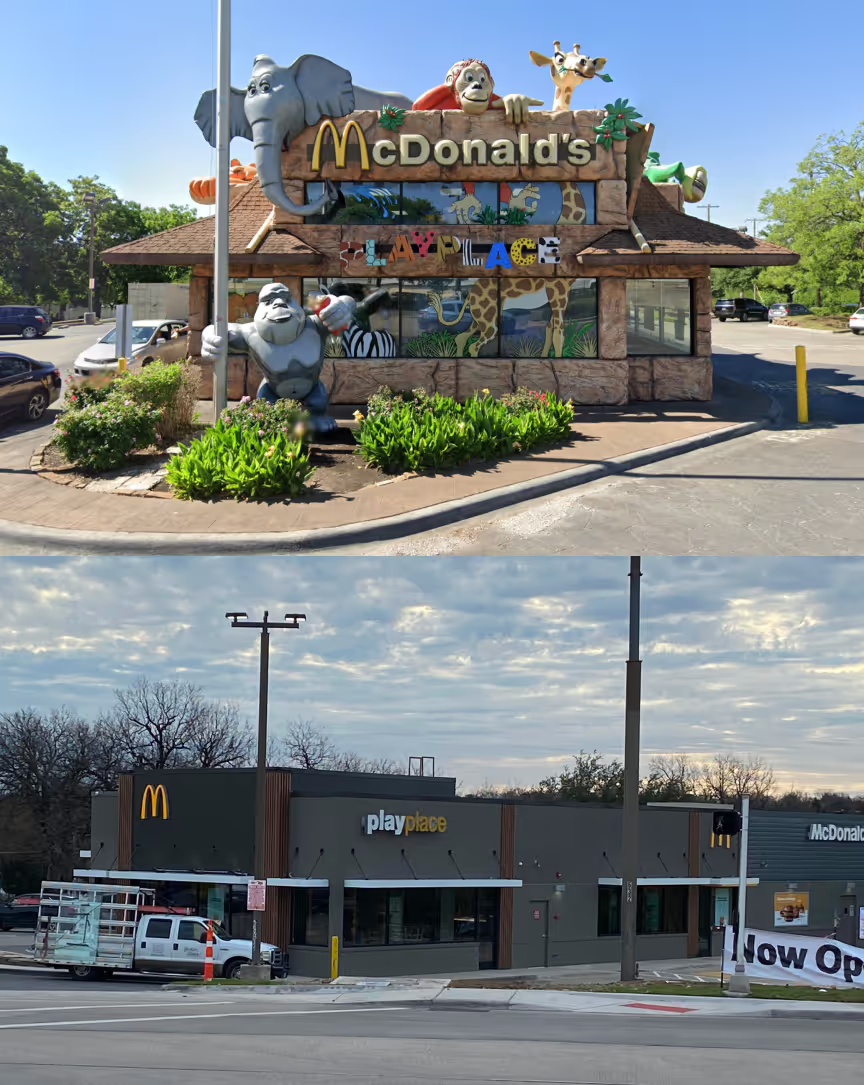
Look at McDonald's in the early 2000s. Restaurants weren’t just places to eat, they were environments. Animals climbing out of facades, bright colors, and playfulness baked into the architecture.
Compare the restaurants that caused delight to today’s version: gray boxes, flat signage, neutral interiors. Efficient. Inoffensive. Emotionless. This wasn’t just a McDonald’s problem. It was a branding era (or branding error).
How Modernization Stripped the World of Flair
Somewhere along the way, “modern” became synonymous with “muted.” Cities replaced ornate light poles with utilitarian ones, homes traded detail for flat white walls, interfaces became grids of gray cards, logos lost character in favor of legibility, and even clothing shed craftsmanship for convenience.
Millennial gray didn’t just dominate interiors. It crept into branding, websites, packaging, and products. What we gained in scalability, we lost in identity.
We Didn’t Just Lose Color—We Lost Meaning
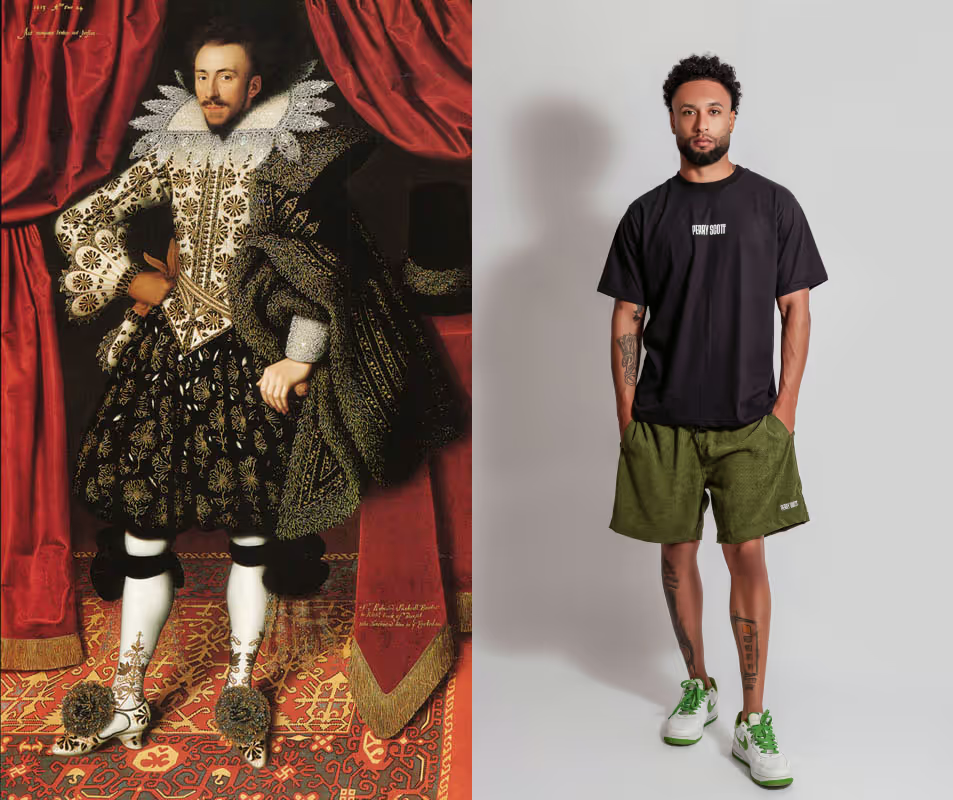
Hundreds of years ago, clothing was expressive by default. Men wore richly detailed garments with embroidery, texture, and symbolism. Skirts had layers, all draped with intention.
Now the cultural uniform is a t-shirt and shorts. Not because we evolved, but because we optimized. The same thing happened to brands. Design systems became rigid, brand voices flattened, personality was labeled “risk,” and distinction was traded for “clean.”
This is why so many modern brands feel interchangeable. Not bad. Just…bland.
In the Age of AI, Bland Is a Risk
AI can now generate logos, color palettes, whole websites with copy and optimized product descriptions. It can do average incredibly well, which means average is no longer competitive.
What AI can’t replicate easily is lived taste, cultural reference, intentional weirdness, emotional memory, or a point of view. That’s where brand comes back in. Not as decoration, but as strategy.
Brand Is Meaning, Not Polish
For a modern design agency, brand is no longer about looking current. It’s about being recognizable and memorable. Strong brands answer questions instantly:
- Who is this for?
- What do they believe?
- Why should I trust them?
- Why do I remember them?
This is why expressive branding now outperforms neutral branding. It cuts through feeds. It sticks in memory. It gives people language to describe you.
And in digital spaces, memorability is leverage.
Personality Scales Better Than Perfection
There’s a misconception that expressive brands don’t scale, but the opposite is true. Personality gives systems context. It guides decisions. It prevents endless revisions. It gives teams permission to choose character over consensus.
For a web agency, this shows up in:
- bolder interfaces
- more opinionated copy
- intentional contrast
- moments of delight
- clarity over politeness
When personality is built into a flexible system, it doesn’t break the work. It makes it stronger.
The World Is Ready for Color Again
You can feel the shift culturally. People are rejecting beige, embracing maximalism, wearing color, and customizing everything. The appetite for personality is back.
Pantone’s recent Color of the Year made that especially clear. The muted, neutral choice of Cloud Dancer was meant to feel calming and modern. Instead, it split the public in two. Some praised it as soothing and sophisticated, or like a blank slate inspiring new beginnings. Others saw it as another symbol of how flat and lifeless everything has become.
That divide matters. It wasn’t really about the color. It was about what people are craving. One side wants restraint. The other wants expression. And the tension between those two impulses is shaping design, fashion, interiors, and branding right now.
People aren’t asking for chaos. They’re asking for care and intention. For things that feel chosen, not default.
They want brands that feel designed by humans, not averaged by algorithms.
Where Brand Goes Next
The next era of branding isn’t about nostalgia. It’s about reclaiming intention.
- Expressive without being noisy
- Distinctive without being inaccessible
- Playful without being unserious
For teams building digital products today, brand is no longer optional. It’s how you signal humanity in a machine-driven landscape.
The return of human UX was the warning sign. The return of brand is the opportunity.
Want your brand to be memorable?
We share thoughtful insights on UX, identity, and AI-ready systems, and help teams design websites that balance clarity, personality, and structure. Explore our services or reach out to start a conversation.