For a long time, Webflow was understood as a powerful page builder. A visual tool for designers who wanted more control than templates and fewer constraints than traditional CMS platforms.
Over the past year, and especially with its most recent updates, Webflow has been quietly redefining what it is and who it’s for. Not through a single headline feature, but through a pattern of changes that point in the same direction.
Webflow is no longer just about building pages. It’s becoming a platform for building entire website experiences.
From Solo Tool to Team Platform
Historically, Webflow worked best as a single-operator environment. Designers built, marketers reviewed, and developers stepped in when needed. Collaboration existed, but mostly through handoffs.
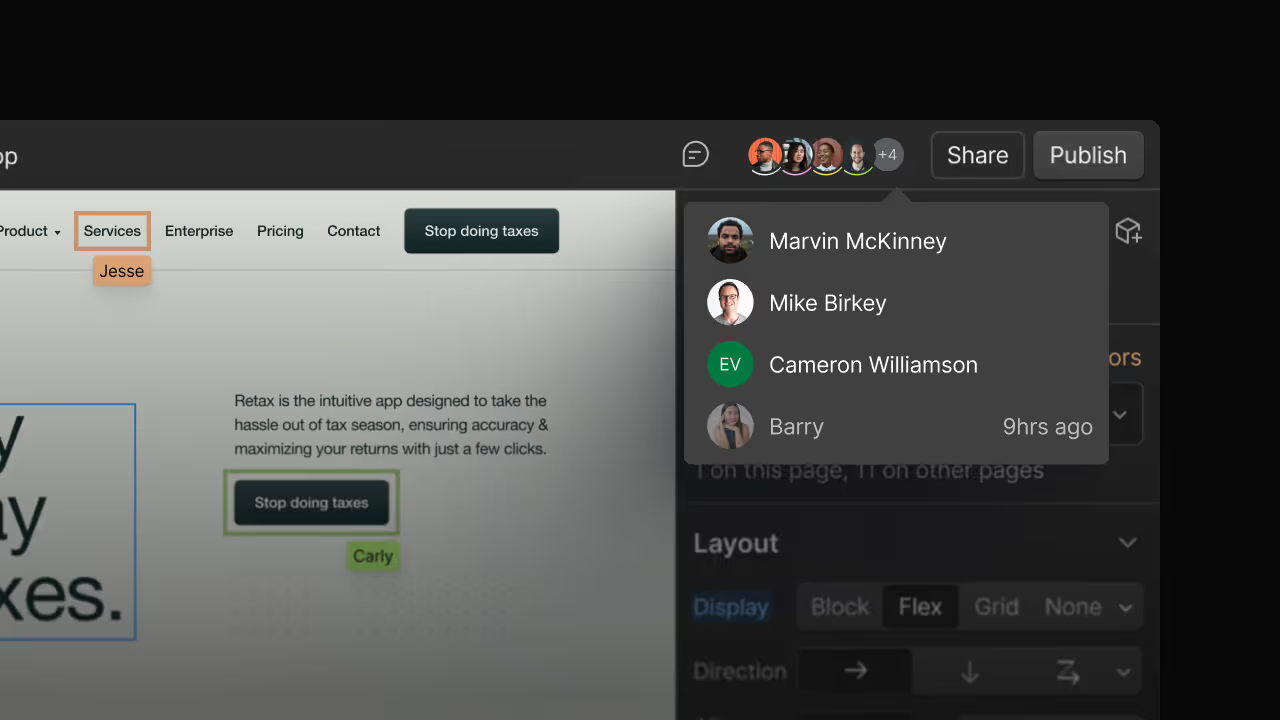
That model doesn’t match how modern teams work anymore. Recent collaboration updates change this meaningfully. Multiple teammates can now work in the Designer at the same time, see each other’s presence, leave contextual comments, and request access directly from the canvas. Client seats and reviewer workflows make it easier to include stakeholders without breaking the build process.
This isn’t just a productivity improvement. It’s a philosophical shift. Webflow is positioning itself as a shared workspace, not a personal tool. One where design, content, and iteration happen together instead of sequentially.
For website design agencies and in-house teams alike, that changes how ownership, feedback, and momentum work.
AI Moves From Helper to Co-Creator
Webflow’s AI features aren’t being introduced as bolt-ons. They’re being embedded directly into how work gets done.
The AI Assistant can now generate layouts, suggest components, help write and refine copy, surface SEO and accessibility considerations, and support repetitive build tasks directly inside the Designer. In newer workflows, it can even generate full-stack web apps from prompts that teams then refine visually or with code.
The important detail isn’t that AI exists in the platform. Plenty of tools have that. The shift is that AI is being treated as part of the creation workflow, not a post-production layer. It’s there while decisions are being made, not after the fact.
That changes the role of the human builder. Less time spent assembling, more time spent judging. Less repetition, more intention. This aligns with a broader trend across digital tools, but Webflow is applying it specifically to how websites are designed, structured, and extended.
The CMS Grows Up
One of Webflow’s longest-standing constraints has been its CMS. Flexible, yes, but not always built for scale or complexity.
The introduction of the next-generation CMS, starting with Enterprise customers, signals a serious investment in content as a core system rather than a supporting feature. Expanded scale, more flexible data modeling, and tighter integration between content and design open the door for experiences that go far beyond marketing pages.
This matters because most modern websites aren’t static. They’re ecosystems of content, logic, and interaction. Blogs, resources, documentation, dashboards, directories, and product-adjacent experiences increasingly live side by side.
Webflow is clearly building toward that reality.
Beyond Pages: Toward Applications
With AI-assisted app generation and deployment through Webflow Cloud, the platform is stepping into territory that used to require frameworks, custom backends, or entirely separate stacks.
This doesn’t mean Webflow is trying to replace traditional development tools outright. It does mean the line between “website” and “application” is getting blurrier.
Interactive tools, calculators, gated experiences, and data-driven features can now live closer to the design system, CMS, and content strategy that surround them.
That proximity matters. It reduces fragmentation and keeps experience decisions cohesive.
A Platform Built for How Websites Actually Evolve
Taken together, these updates reveal something bigger than feature expansion.
Webflow is responding to how websites are actually built today:
- By teams, not individuals
- With AI in the loop, not on the sidelines
- As evolving systems, not static deliverables
Design, content, structure, and interaction are no longer separate phases. They’re concurrent concerns.
What’s also changing is how performance and insight live inside the platform. With native analytics and experimentation tools like Webflow Analyze, teams don’t have to export their understanding of user behavior elsewhere. Observation, iteration, and refinement can now happen closer to the system that produces the experience in the first place.
What Webflow is assembling looks less like a page builder and more like a Website Experience Platform. One where strategy, creation, collaboration, and iteration happen in the same place.
What This Means Going Forward
The most interesting part of Webflow’s evolution isn’t any single update. It’s the direction they collectively point toward.
Websites are becoming more dynamic, more collaborative, and more tightly intertwined with AI-assisted workflows. Tools that support that reality without fragmenting the process will define the next era of web building.
Webflow isn’t just keeping up with that shift. It’s actively shaping it. For design agencies building modern digital experiences, that changes what’s possible, what’s expected, and how the work gets done. As the platform evolves, the advantage won’t come from adopting every new capability, but from knowing how and when to use them.
Building modern websites now takes more than tools. It takes judgment.
We share insights on UX, systems, and emerging platforms like Webflow, and help teams design websites that scale with clarity, collaboration, and intention. Explore our services or reach out to start a conversation.